On a daily basis, I switch between English, Spanish, French, and Portuguese. Of all of these, I am especially attached to Portuguese, the language in which my first encounters with literature occurred. That is why, after learning that one of Princeton’s translators in residence worked in the language, I immediately reached out. Julia Sanches translates from Portuguese, Catalan, and Spanish into English. She has translated several contemporary works and has been nominated for awards such as the International Booker Prize. A few weeks after my first email, I sat down with her on a cold March morning to learn about her background and how she navigates the challenging waters of translation. Here’s what we talked about.
Note: This interview has been edited for length and clarity.
Louise Sanches Barbosa: Could you share a little bit about your background and the paths that brought you to the languages you speak? I know there are quite a few.
Julia Sanches: My family left Brazil in 1988 when I was very young, a year before the country held its first democratic election. My parents didn’t actually vote until they were in their 60s. In any event, we left Brazil and moved to the United States. From the age of three months to eight years, I spoke Portuguese at home, English at school. My mother likes to remind me that my mother tongue, which she, my mother, taught me, is Portuguese. When I was eight, we moved to Mexico City for my dad’s job, and I learned Mexican Spanish. So then it was Portuguese at home, Spanish and English at school. Then I moved again, this time to Switzerland. Outside the house, I spoke Swiss French and English. Nerd that I am, I decided to learn Italian. I also took Spanish so that I could brush up on the language. Then, I moved again to attend college in Edinburgh. After graduating, I did a master’s degree in Catalonia. While I was there, I recovered my Spanish, which was infected by other Spanishes. My friends were Catalan, Spanish, Latin American, so…I developed a sort of salad of Spanish variants.
LSB: And what exactly led you to translation?
JS: Well, as you can tell, I’ve been exposed to different languages my whole life. Like many immigrant children, I’d sometimes play the translator for my parents. When I went to Edinburgh University to study English literature, I was very naïve. I didn’t understand that English literature was literature written originally in English. I took classes that allowed me to travel outside of British literature. For my final paper, I decided to do comparative work, researching Macunaíma by Mário de Andrade and a book by Jean Toomer called Cane. I asked my supervisor if I could write about them, and he said I could only do it if I found an existing translation of Macunaíma. Luckily, I did. While writing the paper, I was exposed to the sort of subjective choices that we make as translators. I spent hours pouring over the Portuguese and English and comparing the shades of meaning. Around the same time, I started reading this Brazilian poet called Ana Martins Marques. A lot of translators start with poetry because we think it’s easier, because it’s short.
LSB: It’s not easier.
JS: It’s absolutely not easier. I started translating her work so I could share it with my friends. And I just got bitten by the bug. I don’t know how else to explain it. I had so much fun. It was this perfect fusion of my love of languages, of reading, of writing, with none of the pressure to create something wholly new. The rest is sort of history.
LSB: I unfortunately need to ask you this, but let’s rip off the band-aid. How do you perceive the future of translation, given the rise of new digital technologies that offer texts “translations”?
JS: I wake up feeling very differently about that every day. I feel strongly that large language models can’t do my job. Not without my help, anyway. And I don’t want to be demoted to the person who cleans up substandard translations done by a machine trained on work that was stolen from me. It’s very extractive. I also believe that the work of translation happens through repeated reading. The more you read a text, the more you understand it, the more it becomes a part of you, and the better you are as a translator of that text. A machine doesn’t have the experiential component of translating. It might give you the illusion of a translation without actually being a translation—not in the way I conceive of it, anyway.
My fear is that AI will continue to devalue a labor that is already devalued. It is very, very hard to make a living as a translator, which is why the translator in residence program of Princeton University is so great. A big part of how I conceive of myself as a translator is as a worker. Yes, as an artist, but also as someone who has bills to pay and should have rights—rights we’re still fighting for.
LSB: Could you talk more about the principles that guide you as a translator? How do you approach your work in terms of recreating a text into a different language?
JS: I have certain philosophies about how to translate. For a very long time, and probably still now, people have thought of the imagined reader as a neutral reader. But I like to think of my imagined reader as a bilingual reader. That doesn’t necessarily mean that the reader is bilingual in the languages that I’m translating from, but bilingual in the sense that they’re used to interferences, they’re used to code switching, they’re used to opacity, they’re used to juggling two cultures, two languages, two ways of speaking and being in the world. So that’s a lodestar for me. What this means is that I sometimes leave things in the original language, depending on the text, if there’s room for it. I lean into opacity. I very rarely use footnotes. There are very few exceptions. I don’t think it’s my responsibility as a translator to teach my reader the entirety of Brazilian history for a particular allusion the author has made in the text. I think it’s the responsibility of English readers to go search for that history online and educate themselves. It’s the era of Google, right? We no longer have to go to libraries and dusty encyclopedias to figure things out. The barrier is low…
LSB: I think this approach is super interesting. I once translated a poem by Oswald de Andrade that had a lot of specific Brazilian references, which I decided to preserve. The feedback that I received was pretty much to add footnotes. I think this brings us to the dilemma of domestication and foreignization. How do you approach that?
JS: Well, there’s a range. I think that dichotomy is helpful as a way to speak about what you’re actually doing, but it doesn’t necessarily affect how I do my work. One thing I forgot to mention is that we’re also translating in an era of American hegemony. It’s not like the US is footnoting all of its Hollywood exports.
If you go too far toward domestication, then you might lose the sense of place and history. If you go too far toward foreignization, you might risk exoticizing this other culture, which is equally dangerous. I try to live somewhere in the middle. I’m not going to replace this Mexican pop star with a U.S. pop star just to make the reference work. Because that music star might have a particular importance that isn’t worth papering over just so that the reader feels more comfortable. If you just give the reader things that they feel comfortable with, then they may as well just be reading American literature.
LSB: That’s a good point. I am still curious about your collaboration process with your writers. I know you translate a lot of contemporary literature, such as the works of Eva Baltasar. What is that like?
JS: It depends. Some authors really want to be involved in the process and others are just there to answer questions. Some are really busy, so they can only answer the questions you send them. The issue with translating English is that a lot of authors speak it…or think they speak it. One of my first long translations was a short book by the Portuguese author, Susana Moreira Marques. It was a very challenging first text because I don’t really speak Peninsular Portuguese. As you know, Portuguese from Portugal is a different animal. Luckily, Susana speaks English. She had lived in London for years, though she’s back in Lisbon now, and was available for questions, looked at the translation, made comments, and was generally respectful of the role of the translator. That book was also a learning experience because all three of the editors who worked with me spoke Portuguese. I’ve never encountered that again. The experience was highly collaborative. You know, sometimes I open my WhatsApp, and I think how lucky I am. Eva Baltasar, Munir Hachemi, all of my authors are there. I would have never dreamed of that when I was a kid. My favorite kind of author to work with is the translator-author because they know what it takes to rewrite a work of literature in another language. So they’re good at conceding your authorship of the text.
LSB: In your response, you mentioned being respectful of the translation. What does that entail?
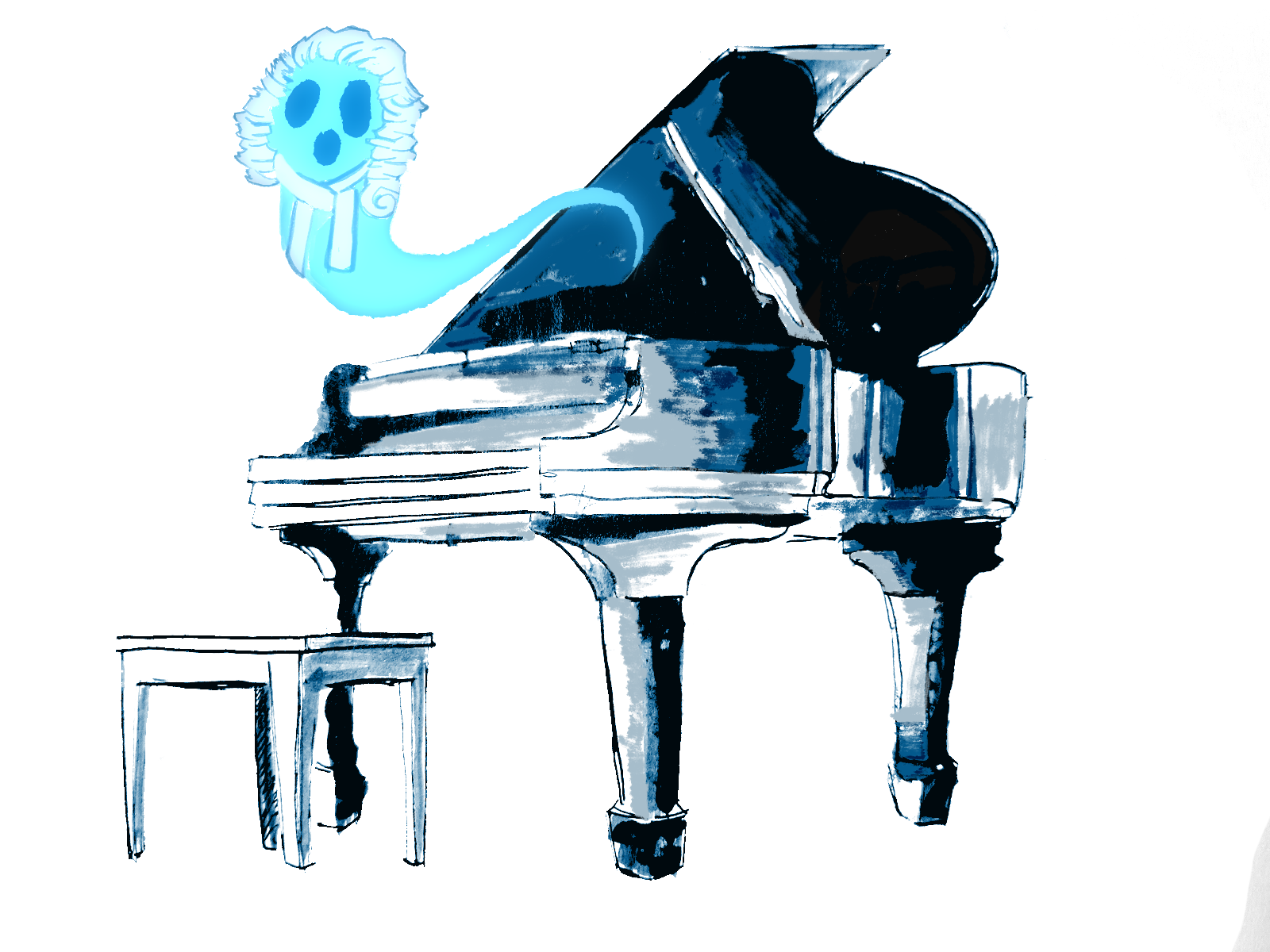
JS: I think being respectful of the translation process entails letting the book go. Understanding that the text has to undergo a cellular transformation. And that transformation is, in part, unique to me, because if you were to translate Geovani Martins, for example, you would create a completely different translation. There is no universal singular perfect translation. I think of translation as interpretation. Interpretation in the sense of a pianist interpreting Bach, right? It would be really difficult if Bach showed up as a ghost every time a pianist was playing one of his concertos and said, “No, no, no, no, no, not like that. I want it only like this.” Only, the piano itself is completely different, the keys are in different places because it’s a different language, it’s a different engine. Maybe that’s what it means to respect the authorship of the translator? Don’t haunt me—that’s what I mean.
LSB: I really appreciate how you said that. Every translation is, in fact, an act of interpretation.
Louise Sanches Barbosa is a contributing writer for Second Look and a junior editor for the Nassau Weekly.