-
Licorice Pizza: An Ode to Young Love and Cinema in the San Fernando Valley
A Nass writer looks at the newest film from Paul Thomas Anderson.
-

The Women of Mahra
These women—both remarkably free and subjugated—tell a story of a history in flux.
-

No Filter
There’s no reason that competence and authenticity should be odds with one another. Yet many of the ways that we read authenticity—Bernie Sanders’ oversized suits, per say, or Trump’s disregard for political correctness—do defy the codes through which we usually measure a candidate’s fitness for office.
-
-

Putting the Pillowman to Rest
After The Pillowman’s last show, I spent the night in a bed on the Intime stage. This was not my plan. Rather, my play was over: the actors were drunk, the set would soon be struck, and I, a tiny Atlas, newly liberated and upright, had merely intended to lug my mattress from its place…
-
‘Synecdoche, New York’
To say that art in our society has taken on religious connotations is not to say anything shocking or new. Nietzsche presaged this transposition of religious fervor from church to museum as early as 1878 when he wrote in Human, All Too Human that “art raises its head where religions decline.” Nietzsche wrote this, of…
-

St. Louis, Missouri
When asked where I would like to work when I join the movement dubbed “education reform” in order to insure that students in urban areas have access to a quality education, I asked myself if I would, should, consider working for the public school system in St. Louis. Explaining my St. Louis upbringing to someone…
-

How to Talk to Your Friend about Jordan Peterson (and Social Justice)
The challenges of friendship with a fan of Jordan Peterson.
-
PUP’s Into The Woods
Something about last week—Tuesday night, Wednesday noon—made me want to see the Princeton University Players’ production of Into the Woods.
-

Behind the VHS, Betacam, and GoPro: Ivar Murd and his Production of Cult Music Documentary u.Q.
A writer visits the New York Baltic Film Festival and delves into the world of the late Estonian music star Uku Kuut, as captured on film.
-
Two Hundred and Six Bones
When Nelson dies, All two hundred and six Of my broken bones Will ache for you.
-
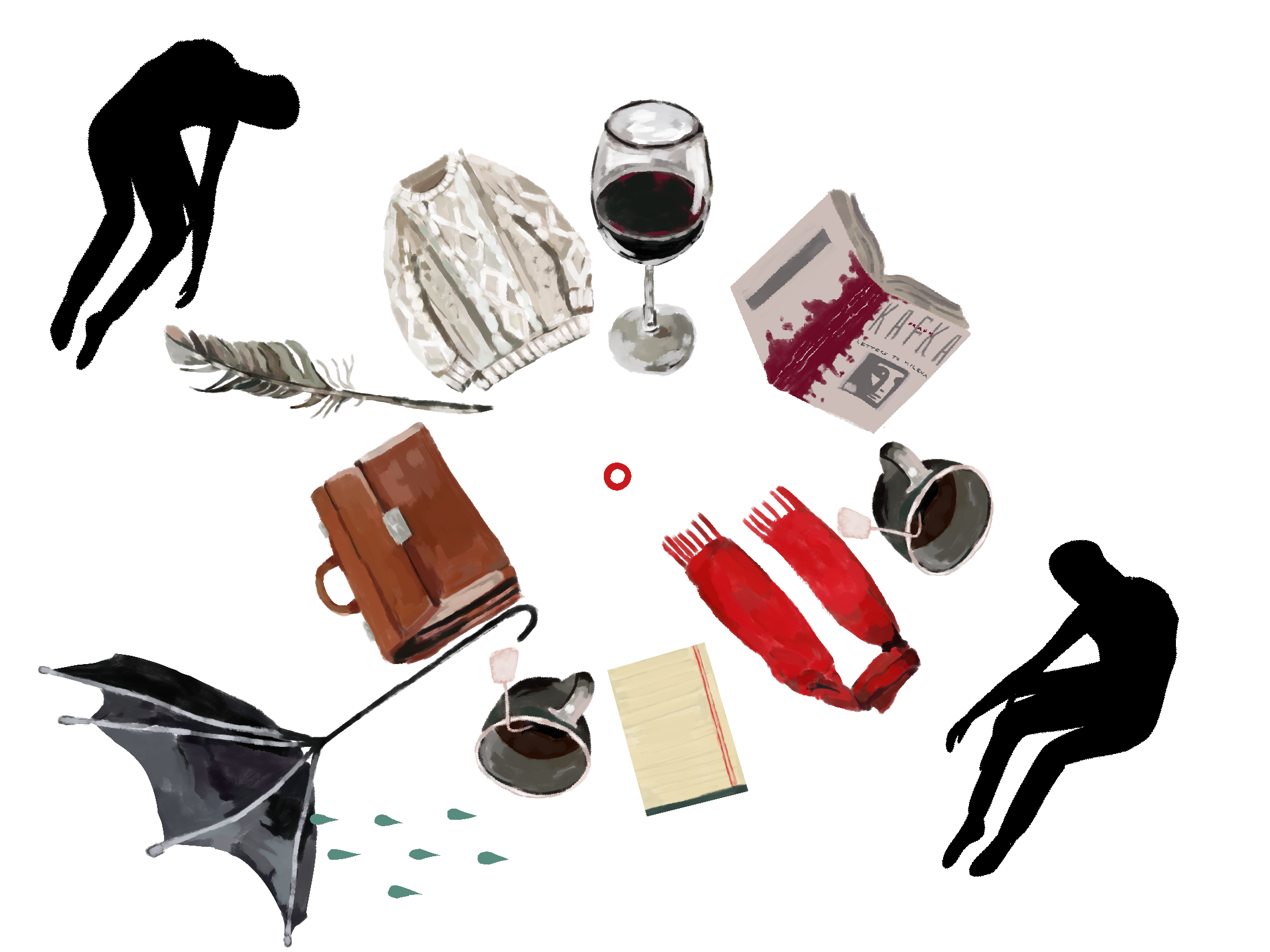
In the Margin
“The curling ends of cursive letters reach toward something that is impossible to grasp. The problem is evident on the page: there is always a space between one thing and another.”