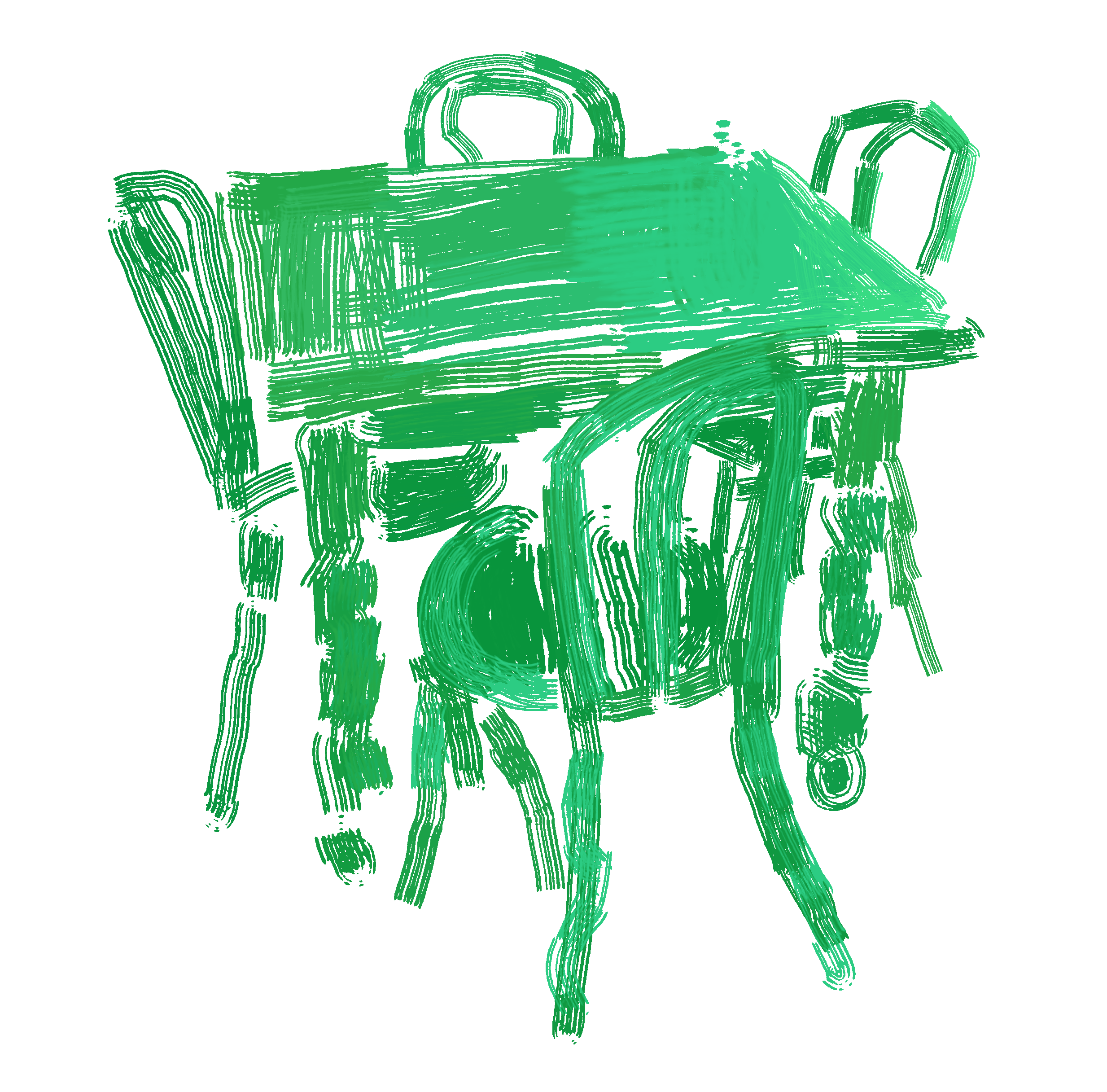
Every room in our house is a dining room. We took a season and painted all the walls red, all the ceilings black, and we replaced all the furniture with a long dinner table in each room, with two ornate chairs placed at each end. The tables vary in size a little depending on the dimensions of the room, but the elements are always the same. We started with the bedroom, carrying the bed frame out and down the stairs and throwing it onto the street. We had a difficult time finding a small-enough table to fit in the cramped spaces of the bathrooms. Dining in those rooms was always uncomfortable, but then again, nothing about this is comfortable.
Now, we are in the living dining room. We each have a candle illuminating our respective plates, and there’s a long stretch of darkness on the mahogany between us. Our candles mark our passage through our rooms, going up stairs and across thresholds. Without the light, the other rooms seem less real, dark and always anticipating fullness.
There are rules for this. They are unspoken, but we understand them all the same. They boil down to: when one plate is full, the other is empty. Today, one of us has a full meal of roasted beef and steamed vegetables. The other of us is watching, long hands gripping the table and watching, eyes sunken and skin stretched thin around the orbital sockets. Our throats bob, one with the rhythm of digestion and the other with the anxious swallowing of when one’s mouth is dry and one’s stomach is empty.
We are in one of our in-between stages. One of us has yet to reach the state of emaciation where the other has to carry them between dining rooms, and the other of us has yet to reach the state of engorgement, where they can barely fit through a door. When that happens, we switch: the smaller one is allowed to eat without restraint, and the other begins the process of deflating.
The designated empty plate is starting to collect dust. It has only been moved between rooms, but never dirtied. That is our unbending rule: never fill the empty plate.
Meanwhile, the full plate is quickly becoming empty, hands tearing into the beef. We quickly did away with utensils, as we found they only impeded us in our pursuit of order, of stipulations and rules. Without utensils, we could remove the dishwasher. Its electric innards dragged after it like the tail of a balloon losing its helium. We threw it into the pile with the rest on our driveway.
We don’t talk much. Words are tautological to the intimacy of structure. Instead, we communicate in the way a hand brushes crumbs from the corner of the other’s mouth, or a tongue searches for a piece of lettuce between the other’s teeth in the pretense of a kiss. We make love in the empty space left by hunger.
In the early days, the stretching silences would occasionally be broken by the shrill cry of a phone ringing. At first, we kept the phones, appreciating the time to talk to our mothers or our friends, but after a while, the voices rang with concern and eventually outright disgust. So, we got rid of the phones, cutting each of the landlines and ripping them out of the walls. Now, when we do speak, our voices are scratchy from disuse.
After the meal is finished, we wait.
It is a Sunday, midafternoon, when one of us notices something that the other does not. This is significant, the beginning of the end: mold.
I remember marrying you. It was a clear day, but you were petrified by the idea of rain. You insisted that it was a disaster from the start. We should have booked an indoor venue, just in case, even though it was the dry season and we hadn’t seen rain in at least a month. It was a perfectly normal wedding, for perfectly normal people, and it did not rain. The cake was the grandest thing I had ever seen in my life, and you didn’t take one bite. Your mother was wearing a hat twice as large as her head with some kind of lace swan affixed to the top. It tottered back and forth like a seesaw, always on the brink of collapse; I remember that.
What we have is delicate and precarious, and if we speak even a word about something like this, it could all come tumbling down. The walls might cave in, or worse, the bed might mend itself and make its way back inside, and then we’d have to go outside, walk down the street again, exchange words with the neighbors, go to work, reconnect our phones, and call our mothers. We would have to return to life with its unpredictable pains in place of our predictable ones. We cannot do that.
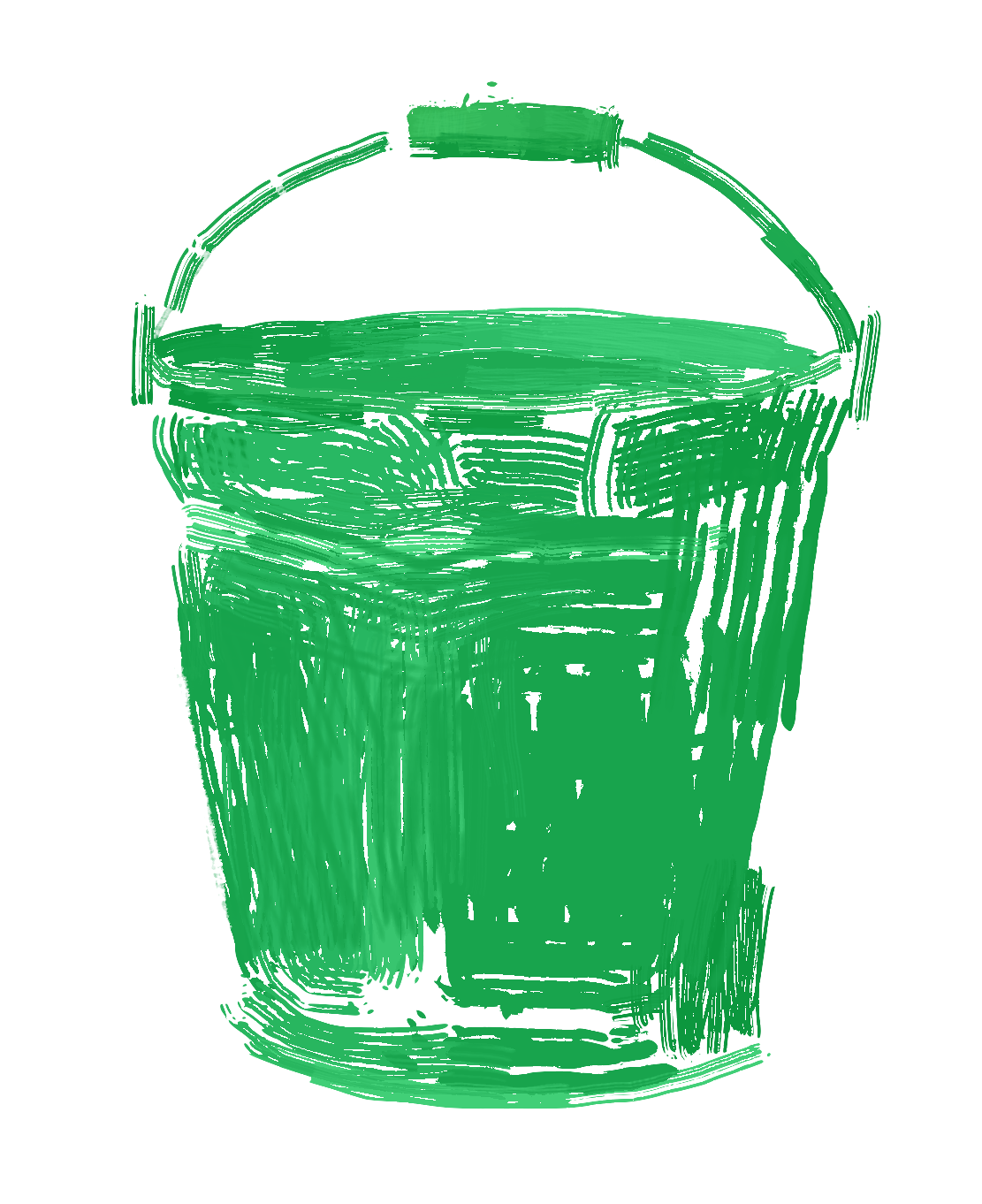
The meals never stop coming, but they are wrong now, and they make us sick, both of us. There is, of course, the physical ailment: the bucket now at the legs of each table, to catch any assailing vomit, after which a cloth is produced to wipe the excess from the face. The worst sickness is knowledge. The worst is knowing that the house of dining rooms is seconds from collapse. This is unsustainable. But we cannot stop.
The vomit turns to blood in stringy filaments. We are too weak to switch places. There is no one to prepare the meals, and no meals to eat, and one of us is sick, and both of us are sick. As we near the end, our eyes might meet across the table.
One of us might give a look that means, do something.
And the other might respond like, I can’t.
And there might be a pause. We might look at each other with tired eyes that say, I love you, or I’m sorry.
Leave a Reply