“As all the specialists in passion teach us, there is no eternal love but what is thwarted. There is scarcely any passion without struggle.” – Albert Camus, The Myth of Sisyphus
…
On a Sunday in Cortina, Italy, Lindsey Vonn, age 41, is at the start of the Olympic downhill course. She possesses one titanium right knee and one fully-torn left ACL. Twelve racers have gone before her, she is the thirteenth. American Breezy Johnson is currently in first. Vonn taps her poles in a good luck ritual, three neat bangs, before putting them over the timing wand. Her breathing is loud enough to be heard over the din of her coaches’ yells. She is hissing the air in, her mouth forming a perfect O-shape as she exhales. She is looking down at the possibly impossible: gold with a ruptured ACL. At the sound of the starting beeps, Vonn launches out of the gate, throwing herself forward and down the icy slope. After just thirteen seconds, before reaching the first marker of the course, Vonn is flung into the air. Her shoulder clips the gate. Her right arm gets caught in the panel and twists her off kilter. She disappears into a mushroom cloud of snow and reemerges as a tumbling mass down the hill. She skids to a stop, her legs splayed out, the tails of her skis tangled and stuck under her. Her body resigns, her head drops back into the snow, her perfect-O mouth now crying out in pain.
…
For 34 years, there was but one God in the ski racing world. The Swedish Ingemar Stenmark’s 86 World Cup victories were the stuff of mythology. His record stood untouched through changing equipment, evolving techniques, and the new legends of the sport. Any athlete chasing history had to chase Stenmark and his 86 wins first.
2013: 59 World Cup Wins
In February of 2013, Vonn suffered a complete tear of her right ACL and MCL along with a tibial plateau fracture at the super-G World Championships. The damage was catastrophic and required reconstructive surgery and months of rehabilitation. She initially attempted a comeback later that year, but upon reinjuring the same knee, Vonn was forced to miss the entire 2013-2014 season. Most significantly, she missed the 2014 Sochi Winter Olympics, where she had been a leading favorite to defend her 2010 downhill gold medal.
2016: 76 World Cup Wins
In February of 2016, Vonn crashed in a super-G in Soldeu, Andorra, fracturing her left tibial plateau. At the time, she was leading the overall World Cup standings and was a strong contender for another overall title. The injury ended her season immediately, costing her the chance to secure what could have been a fifth overall World Cup crown and additional discipline titles. By November of the same year, Vonn was back on the slopes. But in a training crash at Copper Mountain, Colorado, she fractured her right humerus. The damage was extensive: her arm was surgically screwed and plated back together, but the nerve damage left her hand essentially unusable. After trouble holding on to her ski pole as she raced, Vonn duct-taped it to her hand.
2018: 82 World Cup Wins
In November 2018, she suffered a torn LCL in her left knee along with additional bone bruising during training. Already battling chronic knee damage, she attempted to compete through the pain during the 2018–19 season but was visibly limited. She could not pull down into her tuck, a low aerodynamic position skiers use for speed, the way she used to.
Vonn announced she was leaving after the season; the deterioration of her knees had advanced beyond what her body could endure. Vonn—then the second-most decorated skier of all time—was done. So, in 2019, Vonn took her final bow and said goodbye to ski racing, limping away from the sport and her dreams.
But retirement was unfamiliar to Vonn, who spent the better part of her career as the injured underdog afflicted with and addicted to making comebacks. In a statement on Instagram, she wrote, “Retiring isn’t what upsets me. Retiring without reaching my goal is what will stay with me forever.” She was hungry still, stinging from her body betraying her before she was ready. Though her knees appeared to be done, Vonn felt there was more left in her. A partial titanium knee replacement in 2024 removed her pain. She could train again. She was chasing the ultimate comeback on the world’s largest sports stage: the 2026 Winter Olympics.
In December of 2025, it looked like her comeback might be successful. She won the first downhill of the World Cup circuit in St. Moritz, Switzerland. She won another in Zauchensee, Austria, and finished on the podium in five consecutive races. Was the ski god back? As the Games approached, Vonn, the five-year retiree, was a strong favorite.
While the rest of the world was preparing for the Olympics, ski racers were still competing on the World Cup circuit. Just one week prior to official Olympic training runs beginning, Vonn was in the Swiss town of Crans-Montana. With the clouds low in the sky, the mountain was shrouded in a hazy flat light, leaving skiers to race in low visibility. Early in the course, Vonn was thrown off-balance by a jump, landed poorly, and crashed into the protective netting on the side of the trail. She was airlifted out by helicopter. Afterwards, Vonn announced that she had ruptured her ACL. She also announced that she still had every intention of competing, and winning, in the Olympic Games.
But the ending is known: on a mountain in Cortina, Italy, on the precipice of one final Olympic medal, Vonn fell, maybe for the last time, and fractured her tibia. For followers of Vonn, this seemed perhaps inevitable: Could she end any other way but a loud, painful finish, an injury, her famous resilience souring, once again, into masochistic extremism?
It is hard not to wonder if she saw it coming, too. And if she did, what restless, unyielding drive, made retreat impossible even when the ending felt written in advance?
…
Alaskans revere the Iditarod, understood by the devout as “The Last Great Race on Earth.” It is the ultimate test of will: one thousand miles in the sub-zero Alaskan wilderness. This race does strange things to people, with reports of mushers hallucinating voices or waving people, or in delirious hazes known as “Iditarod madness,” shedding necessary layers in subzero conditions.
Lance Mackey, an Alaskan mushing icon, along with his wonderdog, Zorro, changed the Iditarod forever when he introduced the “marathon-style” method of racing, breeding sled dogs for endurance and drive rather than sprinting abilities. Even the fastest of elite-bred sled dogs occasionally slack off on long races. But Zorro, home-bred by Mackey, wasn’t like that—he would pull right on through and past the finish. Zorro had something few other sled dogs at the time possessed: an innate desire to run and to pull.
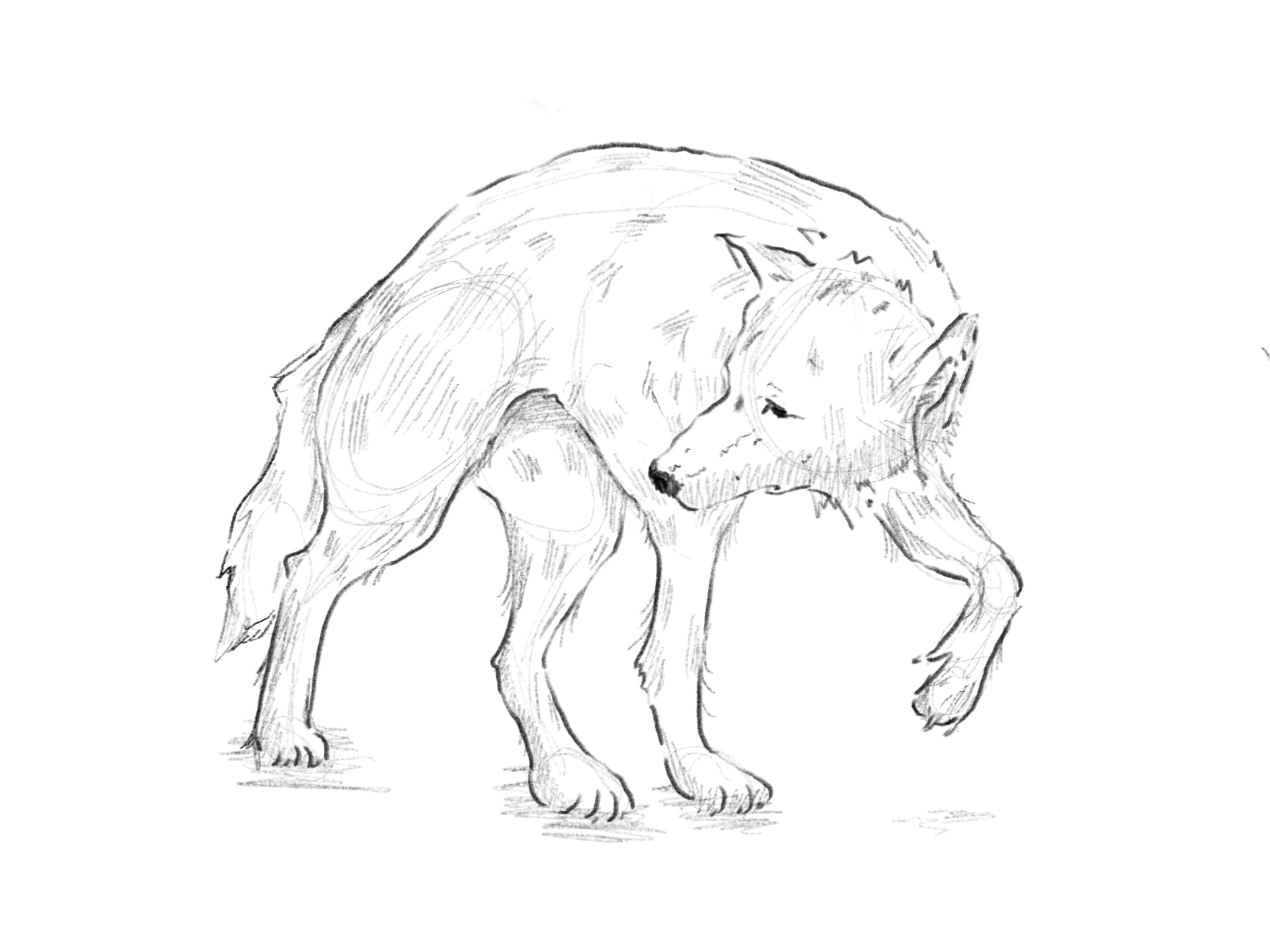
There are stories of sled dogs choosing to lie down in the snow, refusing to take one more step. To these sorts of sled dogs, Zorro’s desire to run borders on masochism; such a hunger entailed a voluntary submission to the cold and the exhaustion. This extremism of passion, despite the personal pain, was, it seems, the driving force behind Zorro’s greatness.
When Zorro was injured in a race by a drunk snowmobile driver, a veterinarian declared his racing days over. And yet, Zorro would tug at his chain when Mackey chose other dogs for a run, whining and unwilling to accept that the run was no longer his. Some are not born for stillness; it is a cruel demand to ask them to live with it.
…
In his essay “The Myth of Sisyphus,” Camus writes of the Don Juan figure as an archetypal response to the absurd, based on the legendary Spanish libertine of the same name. The Don Juan figure, as Camus writes it, does not seek eternal love; instead, he seeks intensity. In his seduction, he multiplies experience rather than trying to secure permanence, loving fully, repeatedly, and without any appeal to forever. Don Juan has completely accepted the meaninglessness of life and chooses to live in the richness of the present. He values quantity over permanence of experience.
Skiing thrives on this absurdist masochism. The slopes are injected with water to be icier. Racers don’t know where they rank against their competitors as they ski; they have to commit fully, at risk of an unaggressive, slow run. The discipline is hyper-engineered to punish hesitation.
…
Transcript from 2013 super-G World Championships
COMMENTATOR 1: And the hands of Lindsey Vonn, trying to find the perfect grip and trying to chase down Tina Maze redefine the season that Maze is having by saying: “I wasn’t there when you took over the overall race.”
COMMENTATOR 2: What a rivalry they have. She’s going to know Tina Maze is in the lead, but this is the woman here with the most super-G wins of any woman in history and 59 World Cup wins total. When she wants something, look out.
COMMENTATOR 1: So many traps in this course with the conditions. Vonn, right now, four hundredths to work with.
COMMENTATOR 2: Beautiful set of turns there. Were they too perfect? Again, in super-G—just getting bounced a little bit low there, but back in her tuck so well.
COMMENTATOR 1: And now has dropped back—
Cries of shock from both.
COMMENTATOR 1: And Vonn over the top, and she is down heavily. Lindsey Vonn.
LINDSEY VONN (agonized screams): Help. Help.
COMMENTATOR 1: And look at that crash, Coop. Ugh, and the landing is absolutely awful to watch. That is absolutely awful to hear. Lindsey Vonn has been injured in every championship event, Olympics and World Championships, dating back to 2007.
…
Vonn could not have possibly believed in the eternity of her body. To race downhill is to accept fragility, in a sense, as a condition of the passion. Camus’ Don Juan, like Vonn, does not lament that love ends; he affirms it precisely because it does. There is a fascinating lucidity in the actions of Don Juan and Vonn. Camus’ Don Juan knows that love is transient and continues anyway. In a statement on Instagram after her Olympic crash, Vonn writes: “Standing in the starting gate yesterday was an incredible feeling that I will never forget. Knowing I stood there having a chance to win was a victory in and of itself. I also knew that racing was a risk. It always was and always will be an incredibly dangerous sport.”
Camus asserts that “melancholy people have two reasons for being so: they don’t know or they hope. Don Juan knows and does not hope.” Though she has, over the course of her career, perhaps recognized the futility of believing in an invincibility of her body, Vonn hoped—wanted—deeply. She had a blunt ambition to both break Stenmark’s record and to win another Olympic gold medal.
But would Lindsey Vonn have been the same skier had she fallen less? Perhaps at the soft underbelly of the legend, beyond the spectacle of injury and return, lingered a desperate fear of unfinished ambition. Nonetheless, it is unwise to speculate, because there exist some certainties: a Lindsey Vonn who had fallen less indicates an unaggressive, safer skier, antithetical to her very being. It is doubtful that 87 World Cup wins, or another Olympic gold, would have changed the way Vonn skis. Part of her success was a hunger, a primal desire for speed. One does not become a winning downhill racer if they do not enjoy the thrill of flirting with speeds verging on a lethal finish.
Pain sanctifies nothing. It is, though, a symptom of the pursuit for greatness. For Camus, the goal is simply like Sisyphus’ boulder: the value lies in the act of pushing, not in reaching the top. One must imagine Sisyphus happy. One must imagine Lindsey Vonn feels the same.
Sophie O’Connor wants you to know she is also really good at skiing.