I walked out of the doors without realizing there were sensors. The alarms did not blare, however. They winced with this tiny piercing sound that could be heard across the street from where I fled. I did not dare to look back. The stolen object was sandwiched in my backpack between my computer and a few notebooks. I would reflect on mis-translation the entire walk home. Guilt and embarrassment crept up and reddened my ears.
French remained hidden, dressed in its English suit posturing as literature written for me. I knew the words I loved only by their replication into English—some translator on a continental voyage from language to language, dropping what would become pieces of my life into my ear. I needed to do it to be alive; I needed to connect with my tradition. It was where I felt the fungal system beneath my feet, twisting like snapshots of history, my history denounced. Yet, I had no keys to this savage sideshow. I could not speak the language, but I knew I’d need to.
I wanted, more than anything, to rip away the familiar shroud of English translation and behold the live French words squirming in their novelty and foreignness, as if I had read them naturally, written underneath my skin.
I questioned why I felt such a desire, such an imperative, to be close to the words—closer than translation could get me. Maybe this is just the story of my adolescence, pretentious and pretending to be monumental.
My case is not a unique one, no matter how much I wanted it to be. I felt this desire because I needed a motive. What do you do with stale motives—ones that do not have any foundation? Nonsensical and illegitimate goals for outcomes unknown. I would just have to follow and see. I had smelled something like a path, sweet and primordial, stretching only four steps ahead of me and in the shape of a hoof. I did not hear the cry of a goat, nor see its foot on mine. Who put this here?
When I took the bus to school, years ago, I would read and think about how nobody around me had access to this little circle of people I had been frequenting. I was not alone. I felt a duty to them and to reality. My jealousy grew into envy. What is this subject that I cannot pin down? Who is Jean Genet?
As I was sulking around my city’s library, I found an edition of his poetry, translated into English, with an introduction by another one of my favorite Jeans—Cocteau. The first lines of the introduction went as follows: “It’s not enough to pity our heroes. We must carry their consequences.”
Genet, this anti-saint of the underworld—homoerotic, bastardized, and gleaming, was who I believed to be the greatest teacher of all.
I was in the middle of reading his autobiographical novel, The Thief’s Journal, in which he finds himself an outcast in his era, 1940s France. Since he was young, he’d been punished for his affinity for thievery: cast out to the all-boys Mettray Penal Colony, where he and other delinquents grew even deeper in their adoration for each other’s spells.
When he got older, Genet turned this into devotion.
“It’s not enough to pity our heroes. We must carry their consequences.”
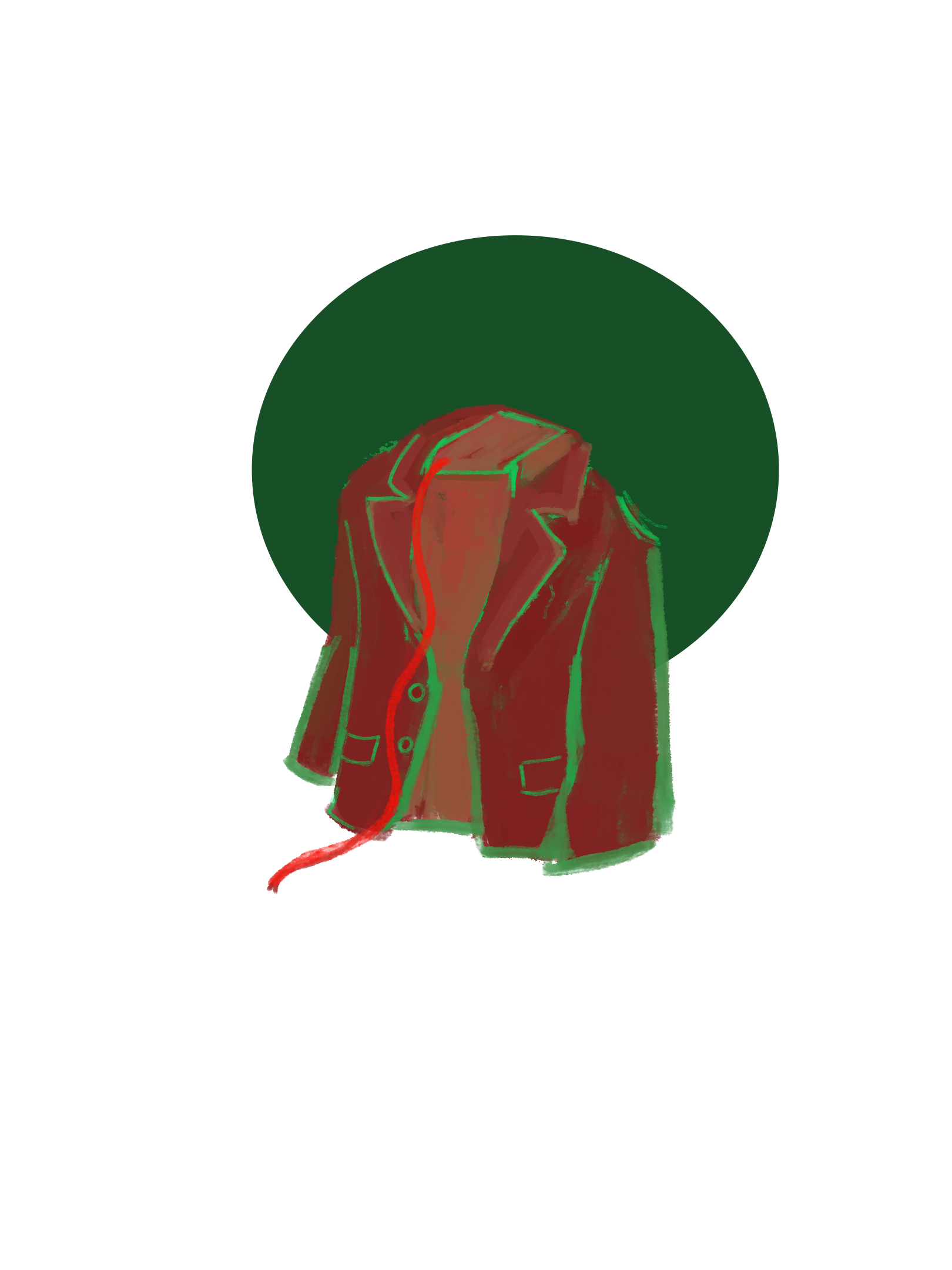
At this time, I was drenched in all of this idolatry. Seeing this imperative, imbibing this order, from Cocteau who I believed had done the same with Genet, I caught myself in a delirium. I mixed traditions and chose what I liked, piercing a parchment of poetry with crimson thread, to make something of a backwards constitution always running in the back of my mind.
To interpret—to translate this duty means carrying the consequences of Genet.
My eyes turned to a book on the same shelf, one of what I called—at that time—“My Children of the Sun”: Rimbaud. It was an anthology of all of his writings, translated by Wyatt Mason, my preferred translator.
It was all I wanted: one giant book with the poetry, spoken through the language I did not know, by the translator I had trusted to carry the tone, the imagery, and the scent of this boy-poet for whom I cared so deeply.
This was what I needed to steal to carry his consequences, to conduct my constitution.
There was no need to steal from a library. But that wasn’t where the need lay. It was in the act of stealing itself. A mistranslation and the blazing desire to possess a copy of my preferred translation of French poetry disoriented my mind enough to actually walk out of that library, sounding the alarms, and never look back.
I returned the book a couple of days after. The guilt was monstrous. I was angry with myself for failing. I felt as if I’d let the entire history, tradition, of my mycelium system of poets down. I confess that stealing did not make me feel any closer.
If I had paid more attention to what Cocteau actually meant, I would have been closer to these writers, for whatever reason I wanted to be, for whatever duty was festering inside of me.
I was reading fast and for myself. My ego was at the center of my devotion to these ideas and people, not themselves. How can I be like them? How can I take up what they left? How can I be so different?
And, upon realizing this, the feeling was disgusting. My delirium was a conscious one of which I was the sole director. I did not dare tell anyone that I had gone through this conversion. I barely even told anyone what I was doing all the time, crouching in my high-school’s bathroom stall, skipping classes to read Rimbaud. Senseless acts for a young person to be worried about, when there is so much else to do and worry about.
I cannot take back my story, this mistake, or my mis-interpretation of those lines Cocteau wrote about Genet. I can inscribe a new commitment, though.
“It’s not enough to pity our heroes. We must carry their consequences.”
Let me study the language, retranslate, and circulate these texts for many more days to come. If we truly believe that there is value in what our heroes are telling us—enough to convince us to steal from a library—we must take up their words again. That is my commitment.
For the Nassau Weekly this week, Michael Grasso steals ever closer to Genet, to Rimbaud, to that… je ne sais quoi. Do you know what that means? Because I don’t know what.
Leave a Reply