
Professor of History Gyan Prakash did not go looking for Princeton in his research. In fact, he was far from his Princeton office when the idea struck him. It was Delhi, 2011, and protests were sweeping across the country in response to the perceived misconduct of the Indian government. As luck would have it, Prakash happened to be there as well.
He decided to go to the Ramlila Maidan, where the India Against Corruption movement was planning to stage a sit-in. When he got there, he was greeted by thousands of young people, some holding the country’s flag in hand, some with signs, and all wearing beaming expressions. They were waiting for Anna Hazare, a 74-year-old activist, to come on stage and speak. The air was hot and sticky, with the sun beating down on the masses of people that had gathered around the arena. The Delhi humidity showed no signs of letting up, but neither did the demonstrators.
For Prakash, the scene around him was strikingly familiar.
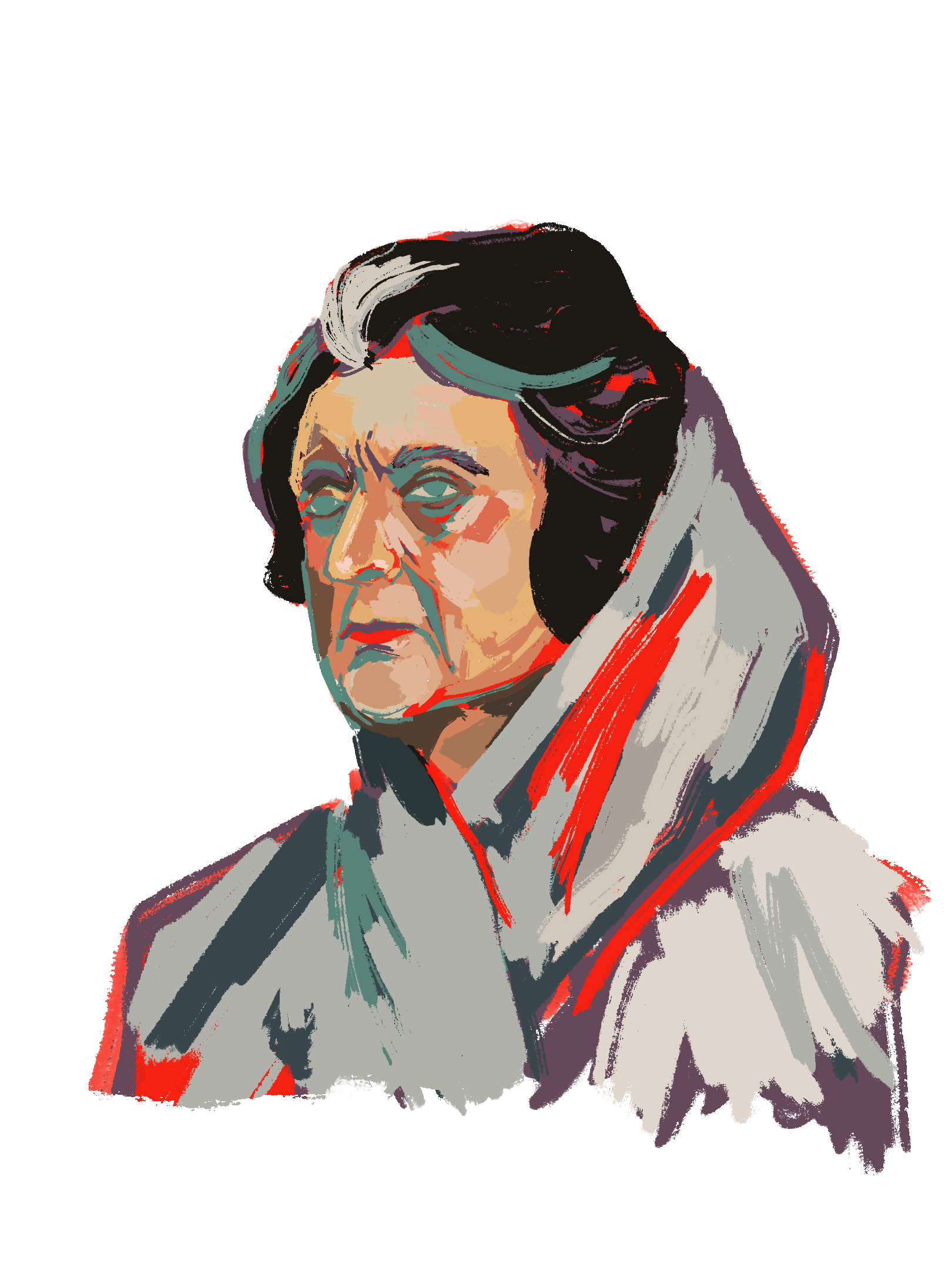 In 1975, Prakash was a student at the Jawaharlal Nehru University (JNU) earning a master’s degree in History. That June, the Allahabad High Court had just found Prime Minister Indira Gandhi guilty of corrupt electoral practices and annulled her 1971 election win. She was subsequently unseated from parliament and barred from contesting elections for six years.
The news of Indira’s corruption could not have come at a worse time. After years of unsatisfactory agricultural output and a deteriorating economy, the people of India were angry at Gandhi and her administration. When the court ruling made headlines, the public, including student activists from JNU, took to the streets to call for her resignation.
Those protests, however, didn’t last long. Soon, Gandhi declared a nationwide Emergency and imprisoned political opponents, activists, and reporters as swiftly as she could. Foreign correspondents were thrown out of the country, and newspapers that did not flatter her administration were promptly shut down. At JNU, students chosen at random were rounded up and arrested.
Despite the onslaught of attacks on the freedom of Indian citizens only 30 years after the country gained independence from British rule, this period in India’s history is not primarily remembered for its constitutional violations. The legacy of the first female prime minister of India is instead defined by the eight million people that were forcibly sterilized during the Emergency.
This is a legacy that Princeton, and its research on development in India, is inextricably part of as well.
Sanjay Gandhi was never elected to public office in India. Yet, by 1975, his power was second only to that of his mother, Prime Minister Indira Gandhi. Chief ministers, cabinet members, and various other high ranking officials all took orders from her. About a year later, in 1967, Sanjay capitalized on this power and launched a five-point program that was designed to hasten India’s development.
Perhaps the most remembered of his points was a family-planning scheme, intended to reduce India’s population. Men were grabbed off the streets and forced to undergo sterilization. Others were prohibited from buying homes if they didn’t provide proof of sterilization, while some were given monetary incentives to do so. In some states, there were mass “vasectomy camps” organized by the government where, in a festival-like production, doctors would attempt to sterilize as many people in as little time as possible. Mobile structures would roll into the centers of villages and cities, acting more like a traveling circus troupe than a vasectomy site. As doctors and nurses operated, there were song and dance routines in the background, as well as colorful poster exhibitions and “alumni” of the camps who were brought in to persuade other men of the procedure’s benefits.
Contemporary perception of the period, referred to as “Nasbandi Ka Vakt,” or “the time of sterilization,” tends to wholly blame Indira and Sanjay for the sterilizations, and frames it as a domestic crisis. But the sterilizations didn’t come from just a power-hungry mother and son.
They emerged after decades of intervention from Western organizations and researchers who cemented a connection between population growth and economic decline.
“When I started looking at the literature of the Emergency,” says Prakash, “everyone just attributed it to that moment in 1975 and Indira Gandhi. And I sort of knew that such a thing could not just happen out of the blue.”
That instinct would serve him well. In 2019, Prakash published Emergency Chronicles: Indira Gandhi and Democracy’s Turning Point.
But along the way, he found Princeton.
“I started looking into it,” says Prakash, “where this whole project came from, and who were the people responsible, and who shaped the thinking about population control. Then, aside from various institutions like the Rockefeller Foundation, and the Population Council that Rockefeller had set up, there was the Office of Population Research at Princeton and Princeton demographers, including Notestein.”
Frank Wallace Notestein was the founder of Princeton’s Office of Population Research. In 1954, the president of the World Bank, Eugene Black, commissioned him to explain the importance of the theory that population growth inevitably led to economic decline. Notestein, however, responded that there was insufficient proof to support the theory. Black and Notestein subsequently entered an agreement where the latter would seek to produce evidence that would support the connection between a decrease in population and economic development.
To do so, Notestein recruited two Princeton academics, Ansley Coale and Edgar Hoover, to travel to India and gather data. Yet, before they had completed the early stages of their project, Notestein had already made it a priority to persuade Indian officials of their supposed population problem.
In 1955, Notestein wrote to Indian Health Minister Rajkumari Amrit Kaur about the urgency of India’s population problem, and the need for government action to curb its growth rate if it were to achieve its goals of poverty reduction and improvement in public health. Notestein’s efforts worked, and Kaur told India’s Central Family Planning board that a national family planning campaign was necessary for improving the standard of living.
Three years later, Coale and Hoover’s research project that Notestein organized came to completion, titled Population Growth and Economic Development in Low-Income Countries: A Case Study of India’s Prospects. Using projections for income in India under three different rates of population growth, Coale and Hoover argued that “at any stage in the foreseeable future of the low-income countries with high fertility, a reduction in fertility would produce important economic advantages. Since these advantages are cumulative, the ultimate benefits of fertility reduction are greater, the sooner it occurs.” Now armed with the evidence needed to support their claims, Notestein’s office and the Population Council sent the book to then-Prime Minister Jawaharlal Nehru, the vice president, members of the Planning Commission, and other government officials. The book was subsequently cited by several members of the Indian government who argued for a rigorous family planning program long before Indira and Sanjay Gandhi were even properly in power.
Eventually, after the Emergency was unexpectedly lifted, Indira Gandhi and the ruling Congress Party lost the 1977 election. A commission of inquiry was set up to investigate the abuses committed during the Emergency, and throughout the hearing a narrative emerged that the mass sterilizations were the result of overzealous local officials who got carried away. That it was a domestic crisis fueled by a mother and son who did not know the limits of their power. That Princeton and the researchers that enabled the sterilizations in the first place were not part of the country’s history.
That story is changing. “The Congress itself has not come to terms to it fully,” says Prakash, “I mean they sort of acknowledge it was a mistake, but not really understand it. But I think from the reaction to the book and other things that have been published, I think people realize that the Emergency was not just a flash in the pan. It didn’t just come from nowhere.”
Mira Gulati dives deeper into Professor of History Gyan Prakash’s research journey.

Leave a Reply