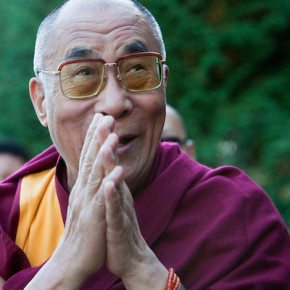
In Jadwin Gym, His Holiness spoke extensively about love, compassion, and empathy for other people. He urged the audience to focus on the “one-ness of humanity” and to achieve meaningful lives through compassion and dialogue with people different from ourselves.
Although we are excited beyond comprehension, we are silent. The wings of a fan turn with purpose; we breathe in this moment while attempting to wrap our heads around the magnitude of a man who commands a room without words, commands a nation without recognition, commands respect without force.
Barry (whose name has been changed for this article) is a gangly kid who looks to be somewhere in that stretch of late adolescence characterized by patchy moustaches. In another world, Barry, gregarious and talkative, would be captain of his school’s debate team, or maybe a theater major. He is funny and he knows it.
Pacifism may sound nice, but it is a hard doctrine to maintain: I struggled for years to reconcile my peaceful intuitions with the idea that we live in a violent world, and sometimes aiding those who are suffering might involve lethal force against those inflicting suffering.
One day this summer, sitting in a blank white apartment that was not mine, I felt a strange weariness. This apartment was full of more books than I will probably ever read and I had fellowships to apply to and emails to write and the whole Internet in front of me and all of New York City clamoring outside.
The legend in question began with a Lego figure of Anakin Skywalker. When your family doesn’t use electricity on the Jewish Sabbath, there is not much to do. You play Risk. You play monopoly. You play Magic: The Gathering. Most of the time, though, you play Lego.
There’s a particular brand of shame that comes with being a tourist, particularly as an American. Especially in Europe, American tourists are almost universally received with a mixture of annoyance and exasperation, the kind usually reserved for flies buzzing around the ear or children crying on airplanes.
For most people of faith, the idea of heaven or Paradise or the afterlife is a pleasant one. Beliefs differ, but having a personal or cultural view of what happens (or what doesn’t) after the heart stops beating is pervasive in humankind, if not universal. Regarding my personal belief, consideration of the afterlife has little to do with its existence or even my chances of getting there.
While I am crowded into the park with my Hong Kong friends, awaiting the moment to begin our procession from Causeway Bay westward to Central, I wonder: Why is it that I, a black American who does not even understand Cantonese, who has lived in Hong Kong for less than one month, am out among the crowds supporting the protests?
I slammed my 12-year-old fists onto the shiny Yamaha piano keys, the polyphonic dissonance echoing my frustration. “Would you please stop speaking Cantonese to me?” I yelled. “From now on, I only want you to teach me in Mandarin or English.” My piano teacher looked at me, her eyes scintillating with disbelief and something else I couldn’t quite grasp at that age.
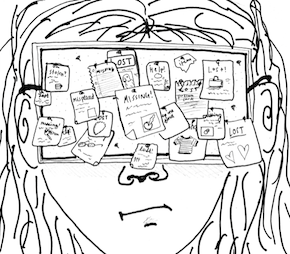
Losses are lonely. They leave you grasping at the memories of entities that may never grace your fingertips again. Friends may offer “where did you last see it?” or even briefly join your search team. But when the search team tires of trying to undo your mistake, you’re all alone. The consequences of your actions—the shame, the anxiety, the grief—are felt only by you.