Lily Gellman, a freshman, is one of fifty students who auditioned for Ellipses, Princeton’s slam poetry team, this fall. Gellman, who became involved in spoken word during her senior year of high school, hoped to continue to hone her passion for spoken word at Princeton and was excited to discover a slam team on campus.
Yet while my parents could censor my wardrobe, they were powerless to change my name. At home, of course, I was Catherine. But at school, I could negotiate on my own terms.
When the Daily Princetonian announced, on October 6, that grade deflation was “dead,” campus remained oddly quiet. There was no cheering, no laughing or dancing or popping of screw-top champagne.
And as the yelling continued, it became clear to me that we had done nothing — nothing, that is, except for being female and alone on a Saturday night.
There’s no reason that competence and authenticity should be odds with one another. Yet many of the ways that we read authenticity—Bernie Sanders’ oversized suits, per say, or Trump’s disregard for political correctness—do defy the codes through which we usually measure a candidate’s fitness for office.
Wu Hall’s Matthew T. Mellon Library is one of the quaintest and most secluded study spaces on the Princeton campus. The “library” in its name is slightly misleading, given that Mellon does not actually hold any books, only a printer, a few tables, and a series of back-to-back wooden cubicles for high-power cramming.
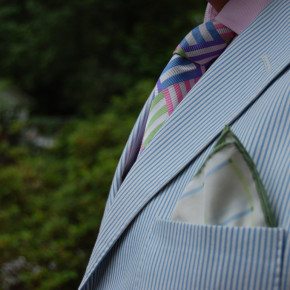
I thought I understood the general order of Lawnparties: live music, free food, and somewhat unsettling numbers of drunken upperclassmen at ten o’clock in the morning. When a roommate first let me in on the “preppy” dress code, however, the tradition struck me as strange. While I knew Princeton was widely considered to be among the “preppiest” of the Ivies, the label had always held a negative connotation to me, and I puzzled as to why students would actively work to perpetuate that stereotype.
When I walked into the women’s locker room at Dillon gym earlier this week, I noticed a poster that made me bite my lip. Tacked up between weekly fitness schedules, the sign grabbed my attention with the headline: “The weight is over.” The line, I thought, could have been pulled from a diet product ad—Sensa, maybe, or Alli. It was the sort of cheesy slogan you see on caffeine-and-diuretic “supplements” at CVS.