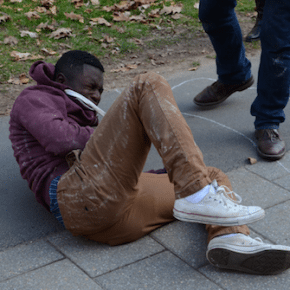
Before I saw a protest on the night of the Ferguson verdict, I was a cynic who idly by and did nothing but criticize as my brothers and sisters fought for change.
The first graffiti I ever saw were unremarkable messages etched into my middle school’s peeling wooden desks: people’s initials conjoined inside hearts, a mysterious pointy S shape, and invitations to “put an x if youre bored.”
Hundreds of people are crammed into a tiny room and the room is pulsating—not in a figurative, metaphorical sense, but literally. Bodies bounce against each other, arms and legs thrash out angularly, and heads bang in unison.
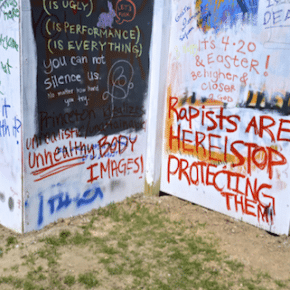
Any place that is affectionately known as the “Best Damn Place of All” cannot continue to be when bad things happen behind the FitzRandolph gates, and it gets even more difficult when the buildings themselves start yelling back.
In the first week of December, joke ticket Will Gansa will face off with Ella Cheng in a run-off election for Princeton’s Undergraduate Student Government (USG) President. Gansa, running on a platform of waffle fries, ripe fruit, and ‘bike reform,’ won 44% of the popular vote to Cheng’s 32%, in the first round of elections in late November.
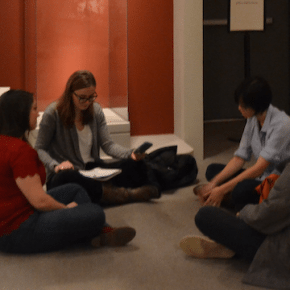
On a cold November evening, I sat down with Ella, Will, and Molly on the floor of the African Art room in the Princeton University Art Museum for their first-ever joint interview to discuss fashion, the experience of time and waffle fries.
I have started this piece many times. Each beginning featured a description of Professor Emeritus of African American Studies Cornel West and his entrance into McCosh 50.
Student activists campaigning for divestment—from fossil fuel companies, weapons manufacturing companies, or companies operating in the Israeli-occupied West Bank—must face an administration that for decades has refused to acknowledge the central point at the very core of any divestment campaign: that the university’s investments should be considered as part of the university itself.