Zines are self-published magazines crafted from conjoining pages of paper into a miniature booklet, embellished with all sorts of mixed media throughout their pages. Magazine cutouts, paragraphs pulled from old books, paint, writing and/or stickers; whatever your heart desires, as long as it can be glued onto a page, it belongs in a zine. It’s this DIY nature of zine creation that has allowed them to become an important form of self-expression as well as a political tool for uniting minorities and queer people. During the AIDS epidemic, they were used to share unfiltered information about the disease, protest government inaction, and document counternarratives from infected individuals ignored by popular media. Easily distributable due to their compact size, they allowed the queer community to creatively carve out space for themselves in a society that sought to silence them. In our current political climate, where legislation banning books and discussions of queerness in classrooms has reached an all-time high, zines and community building have become all the more important.
It’s in the midst of a time like this that a new club on campus, Passionfruit Magazine, was created. While one of their missions is to platform queer art in their soon-to-be-released print magazine issues, another central mission of theirs is to bring together a new community for queerness on campus. Zine making, with its historic roots in community building, naturally seemed like the perfect pick for a first event to introduce Passionfruit to Princeton. Its co-lead Irene Kim ’28 put it this way:
“[Zines’] independent production process and absence of censorship makes them radical by nature,” she said. “I think that creation should be something that’s accessible to everyone. Passionfruit wants to be a safe space that encourages people to write more, create more, connect more, and celebrate their queer identities.”
As I made my way around the room at zine night, I couldn’t help but notice the celebration of creativity, identity, and community that permeated every nook and cranny. Sitting down at a table full of other people, I subconsciously began tapping my feet to the rhythm of the music as various funky yet danceable beats poured into the room from the back corner, where a member of the club was busily manning a DJ deck. Everybody pored over their various colorful zines bursting with fun shapes, things, creatures, and words, while engaging in conversation with the people gathered around the table whether they knew them or not. Community and creativity seemed to be the order of the night, and the room was filled to the brim with it.
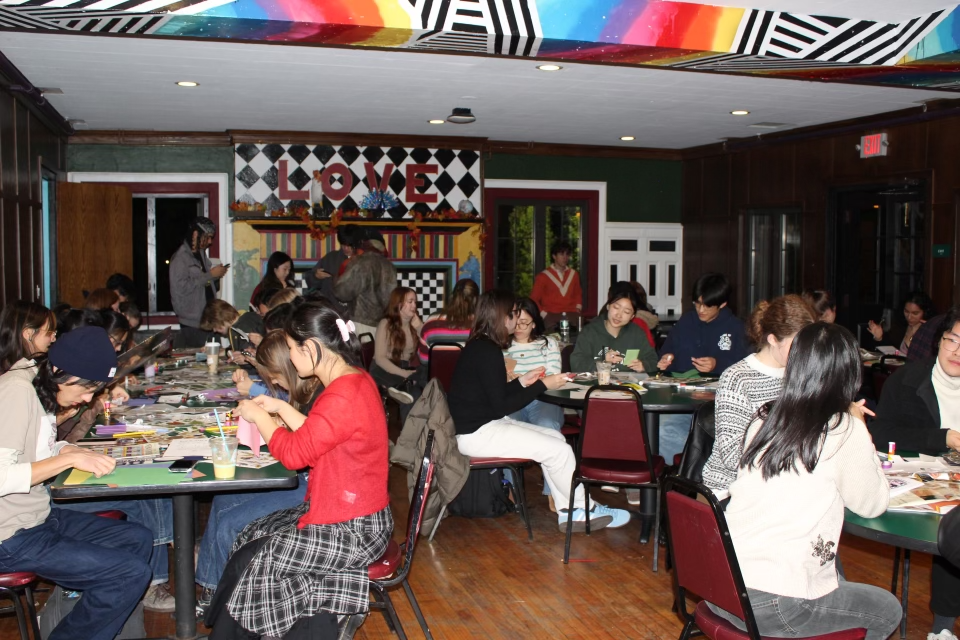
A picture of Zine Night in the Terrace dining hall. Courtesy of Irene Kim.
Sitting down at another table, I introduced myself to Samuel Finlayson, a sophomore in the MAE department. He walked me through the narrative of his zine, which he decided was going to tell a semi-chronological story about the proliferation of car-dependent infrastructure. He then expressed some of his thoughts about the event.
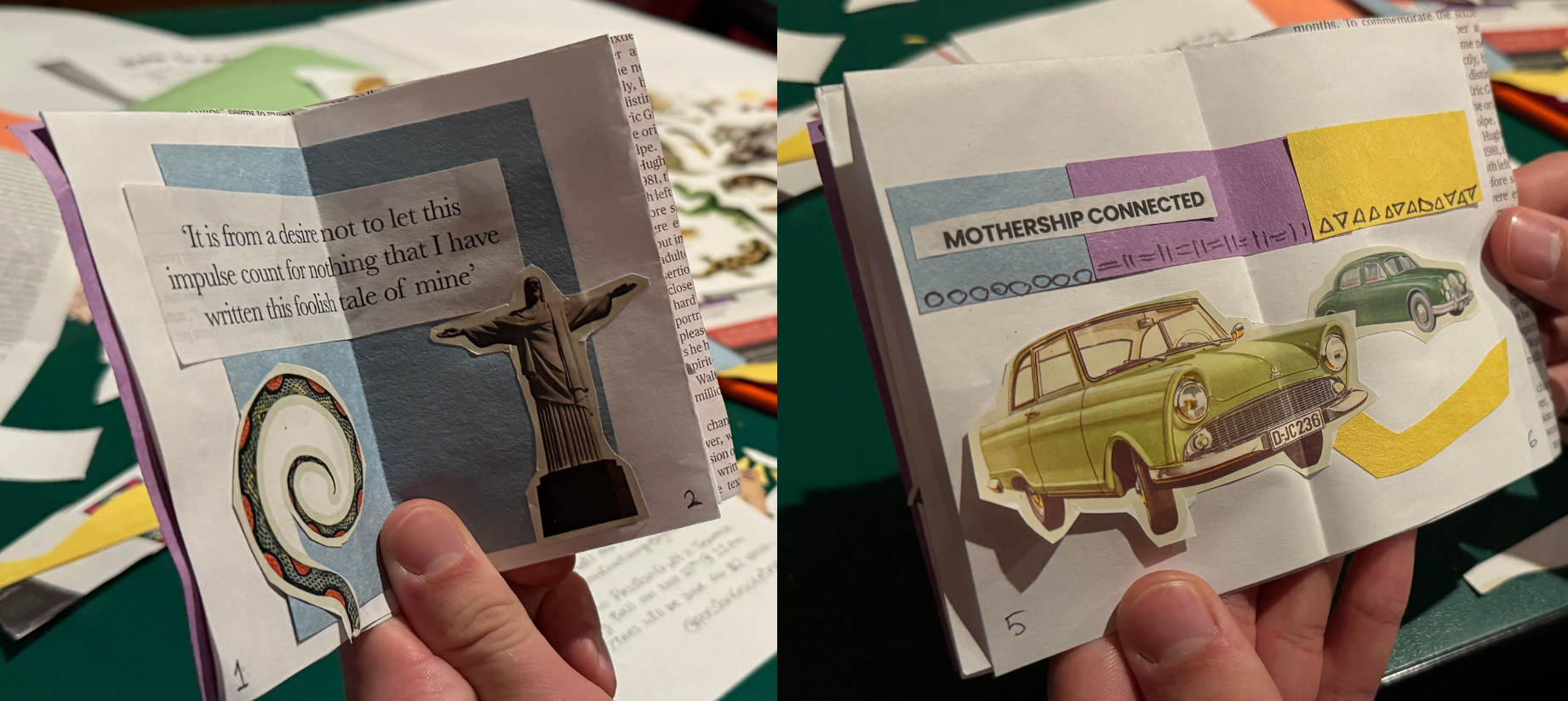
Two page spreads from Samuel Finlayson’s zine. Courtesy of Leia Pei.
“I feel like what this campus needs is more events like this… there’s a lot of hostility, especially in extracurriculars, and I think it’s fun when you can just chill and meet new people, especially with clubs becoming more and more demanding to get into,” Finlayson said. He wasn’t a member of Passionfruit, but was intrigued by a poster that he saw while walking around campus and decided to attend. “Princeton [can feel] very hierarchical and everything is very sectioned off, and so events like these are great.”
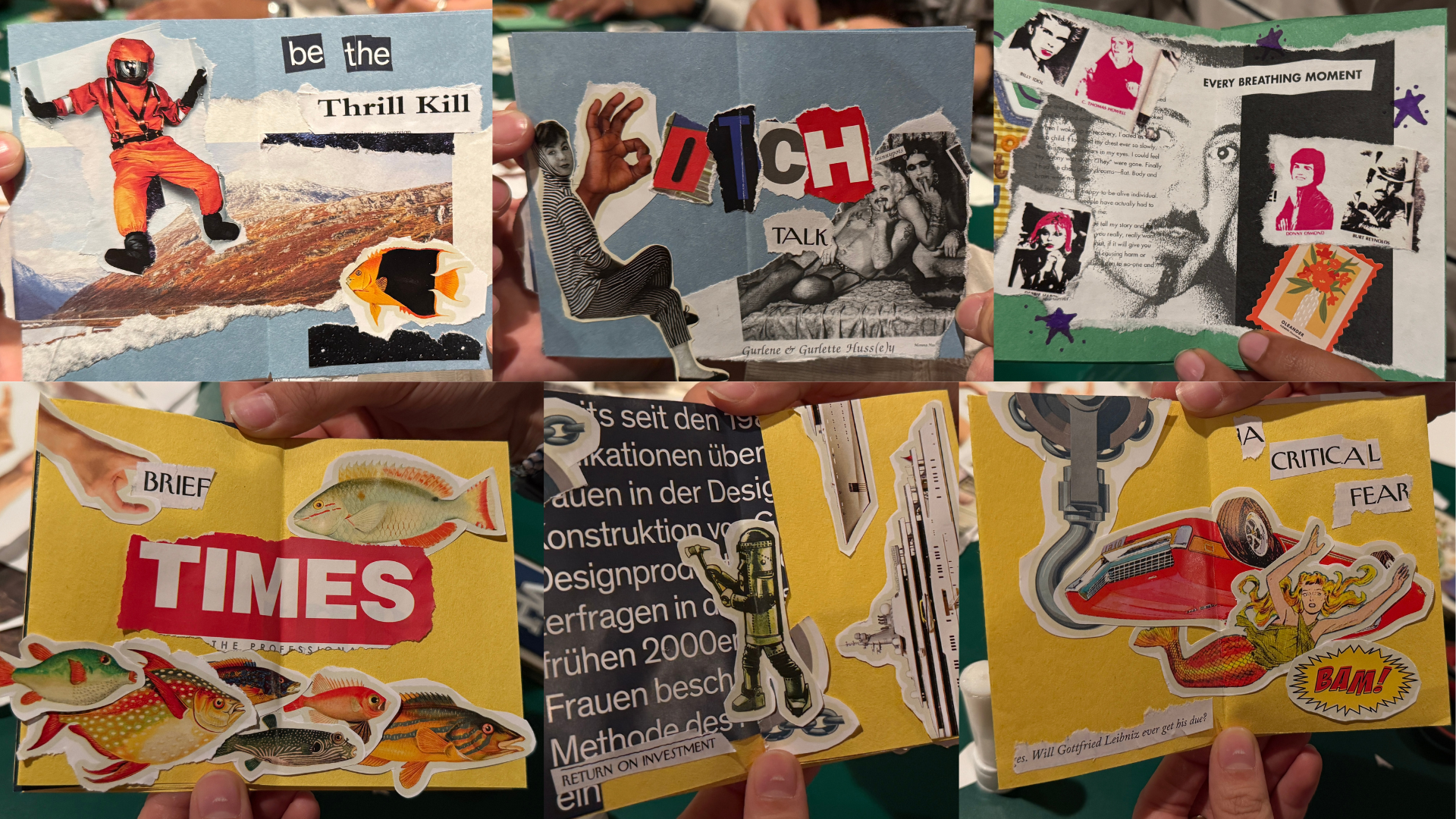
A collage of various pages from zines made by Grace Ding ‘29, Daniel Cho ‘29, Loapi Mokgatlhe ‘29. Courtesy of Leia Pei.
As I sat down at my last table of the night, I talked to Danny Flaherty ’28, a prospective English major, about his thoughts on the event and queerness on campus in general.
“It’s been said many times that the queer community on campus is a little bit disconnected,” he said. “It’s good to have this centralizing force giving people the opportunity to come together. I was just so happy to see so many people here today having a good time… I’ve met new friends, I’ve seen old friends, and it’s been great!”
Indeed, it’s the creation of this new community of friends, both old and new, that is at the heart of Passionfruit and its mission. When asked what singular word she would use to describe the club, Kim’s response was the word community.
“Through these events, people are creating physical creations. But they’re also sitting together with new people. We’re connecting people across grades…different interests…[and] different circles on campus,” she said. “When our existence as LGBTQ+ people are politicized and our rights threatened, being in community can serve as a beacon of hope and resistance. In embracing our queerness, we resist repression and conformity and honor a legacy of loud and shameless activists who have fought for and continue to fight for us.”
Leave a Reply