A little boy with blond hair finds himself alone on a grand stage. There are trees on the stage, but when he looks closely, he sees the twigs are tied on with twine. This is not a real forest. The boy feels afraid. Tears creep into his eyes. He calls out for his Mama. He cannot find her.
A woman with hair wrapped into a tight bun waits backstage. Her face catches the glow of blue and red stage lights. When the music begins, she walks to the front of the stage, confronting a packed audience. Then, she finds herself at the after-party, where people gather to praise her performance. She searches for her father. She cannot find him.
The two films, Hamnet and Sentimental Value, bleed into one another to the point that, in my mind, it is impossible to think of one without thinking of the other. The parallels between the films abound, but to start, both films center on insular family units. In Hamnet, the family consists of Agnes, Will, and their three children: Susanna and the twins, Hamnet and Judith. In Sentimental Value, the family consists of Gustav and his two daughters, Nora and Agnes. Over the course of both films, we see how grief comes to permeate these households. It manifests as absence, as the darkness found in crevices. In Hamnet, it resides deep in the forest, in the hollow of a tree. Then, it descends upon the family when the plague infects Hamnet, and ultimately claims his life. In Sentimental Value, grief settles into the cracks of the family home’s walls. The house is marked by intergenerational trauma: it is where Gustav’s great-grandfather died, where his mother killed herself after being tortured in a concentration camp, and where Nora and Agnes, still children, clung to each other as their father drove away, abandoning them.
If the essence of these films is grief, then performance becomes a way of fashioning that grief into a form the characters can understand. After Hamnet’s death, Will flees to London and immerses himself in playwriting, leaving his wife to mourn alone. In his absence, Agnes learns that her husband’s new play is titled The Tragedie of Hamlet. She feels betrayed that he used their child’s name for entertainment, so she travels to London and, pushing her way to the front of the Globe Theatre, she seeks answers in his play.
The Tragedie of Hamlet begins, and Agnes is faced with a young actor whose hair is painted blonde and whose character bears her son’s name. She watches as Hamlet is struck by Laertes’s poisoned dagger. She watches him sink to his knees at the front of the stage, choking and trembling as death nears. This staged death scene offers Agnes an alternate goodbye. When Agnes first watched her son die, it was a violent, painful affair. She pinned down Hamnet’s writhing body and tried to force-feed him medicine. In one moment he was crying and in the next, he was dead. By contrast, Hamlet’s death is not violent. On stage, as Hamlet nears death, he stretches his arms out to the living, to those bearing witness. Then, a faint smile crosses his face, he looks at Agnes, and softly declares, “The rest is silence,” before collapsing to the ground. There is a gentle quietude in this scene—a suspended moment in which the mutual gaze between the living and the dying fills the theater, and Hamnet can say his farewell.

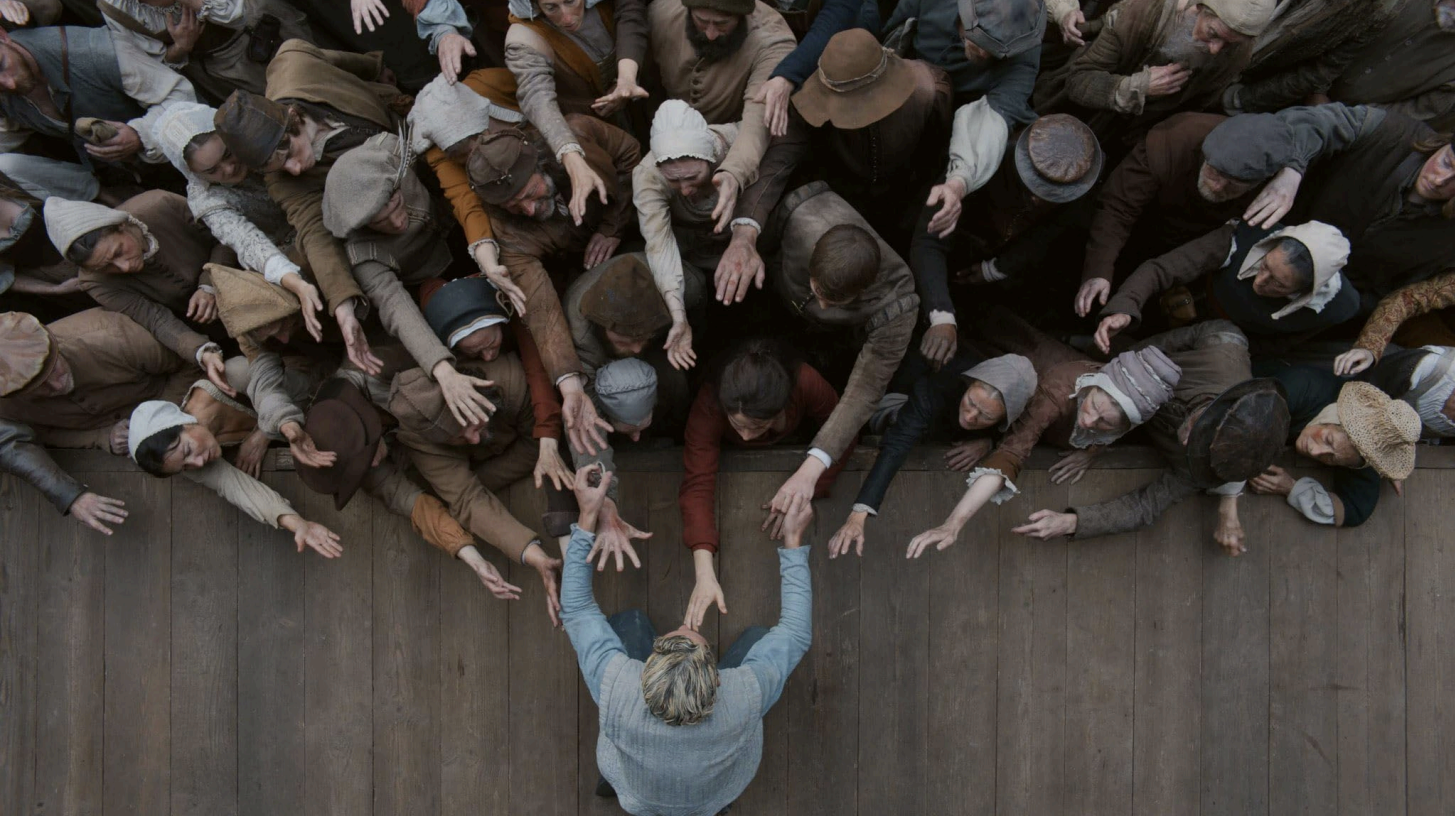
Furthermore, Hamlet’s performance of death transforms Agnes’s solitary mourning into a communal one. As Hamlet dies, Agnes reaches out her hand to him. Soon after, the audience members mirror her gesture and extend their own hands toward the dying boy. The camera shoots this moment from above, capturing the swarm of arms overlapping and yearning to reach Hamlet. It is a cathartic embrace of grief, where all those witnessing Hamlet’s death can confront it together.
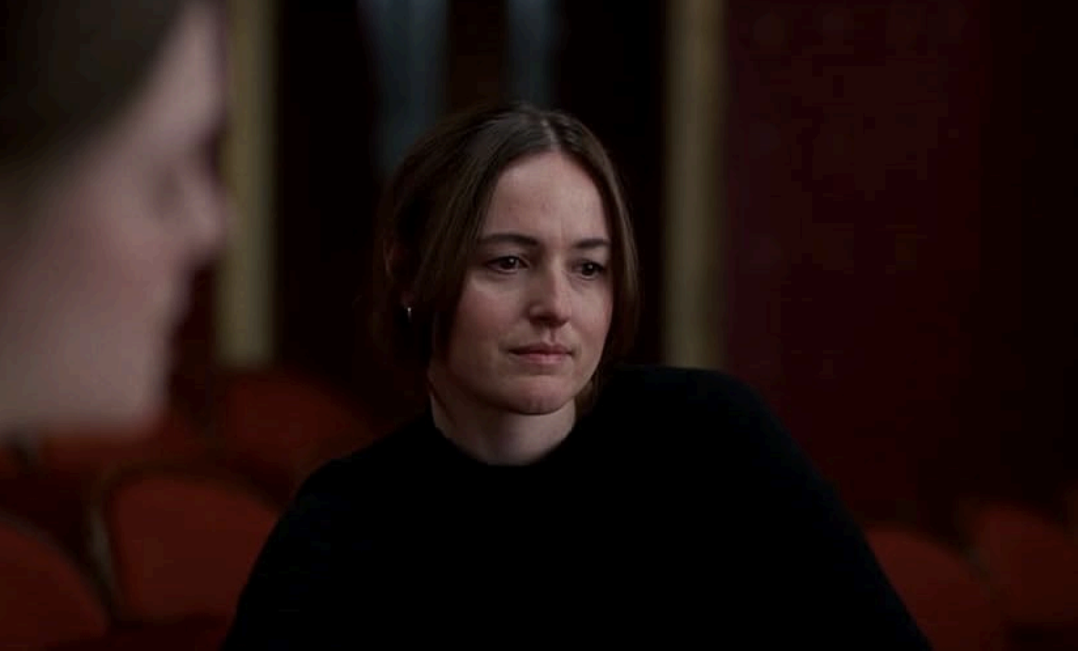
In Sentimental Value, Gustav’s film gives Nora an outlet through which she can begin to understand her depression. In the present day, Gustav, an acclaimed film director, approaches his daughter Nora, now a theater actress, with a part he has written for her. Nora refuses to work with her father, so Gustav gives the part to an American actress named Rachel Kemp. Rachel, though, struggles to inhabit the character’s mind, and turns to Nora for advice. Seated among the plush red chairs of Oslo’s National Theater, Rachel attempts to articulate the character: “It’s like her sadness is such an overwhelming part of her. It’s a beautiful thing, but I can’t tell if that’s just the cause of everything or is it…a symptom of something deeper.” As Nora listens to Rachel, she realizes that Rachel is not describing a mere fictional character, but Nora herself.
The connection feels all the more unsettling when we learn that, at the end of Gustav’s script, the character commits suicide. Later, in the film’s most emotive scene, Nora breaks down before her sister and it is revealed that she, too, attempted suicide. Gustav never knew this. Yet somehow, what he has managed to capture in his script is his daughter’s grief, the very grief born of his abandonment. Sentimental Value ends with a long take showing that Nora has accepted the part in her father’s film. On a reconstructed set of her childhood home, she sends her child off to school, steps behind a closed door, and enacts the character’s suicide. By assuming this role, Nora lays her depression bare on camera, and in practicing empathy for the fictional character (as all actors must do) Nora turns that empathy inward. She begins to unearth the depression she has harbored, while also bridging her estrangement with her father.
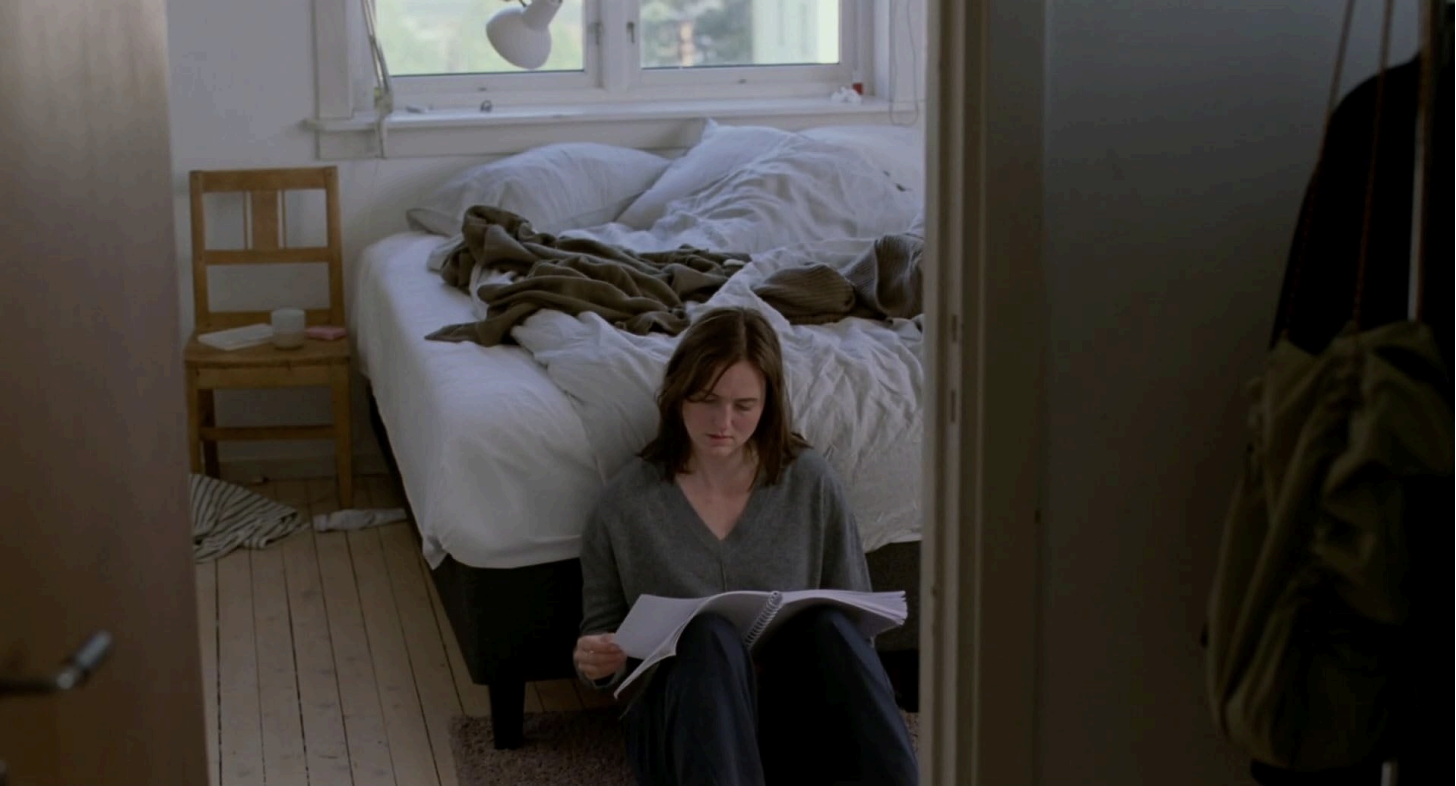
Both Hamnet and Sentimental Value show how performance helps characters process their grief. But they also raise questions about the nature of interpretation, particularly how porous the boundary is between reality in fiction. In both films, fathers write their children into their scripts. Their interpretations do not replicate reality exactly; instead of truth being “lost in translation,” something is gained. It is in the spaces where lived experience has been distorted that their children emerge.
The plot of The Tragedie of Hamlet, with a prince navigating the political affairs of a Danish kingdom, initially seems disconnected from the reality of Agnes’s deceased son. But as the play unfolds, Agnes recognizes Hamnet’s presence in different figures: the ghost king, the young actor, and Hamlet himself. Agnes first sees Hamnet in the ghost king, played by Will, who emerges onto the stage caked in dried clay. The king reflects on his death and describes the poison running through his veins, before uttering, “Adieu. Adieu. Adieu. Remember Me.” In the king’s poisoned body, Agnes can recognize her son’s illness. She understands that, through performance, “He [Will] has swapped places with our son.”
Then, Agnes recognizes Hamnet in the young actor (who, in a genius stroke of casting, is played by Noah Jupe, the real-life brother of Jacobi Jupe, who plays Hamnet). In an earlier scene, Agnes asked her son, “What do you wish to do?” and Hamnet responded, “I shall be one of the players with a sword. And I shall clash it against the sword of the other player.” So on stage, when Hamlet duels Laertes, it recalls the image of little Hamnet play-fighting with his wooden sword. As Agnes watches this duel, a smile creeps onto her face because, in this actor, she sees who Hamnet would have grown up to be: a player on his father’s stage.
Finally, Agnes recognizes Hamnet in the fictional character of Hamlet. When Hamlet dies in the play, the film cuts to Hamnet, alone on the stage, giving his mother a knowing nod before retreating into the darkness. Agnes watches him go and laughs softly, having been granted another goodbye.
The marvel of the play is that all three figures—the ghost, the actor, and the prince—truly become Hamnet for a moment.
In Sentimental Value, Gustav insists that his script is not a reflection of reality. This tension first arises when Gustav reveals to Rachel that his mother committed suicide. Rachel presses Gustav to admit that the protagonist is based on his mother, but he maintains that she is purely fictional. Gustav plays on this tension when he tells Rachel that the stool she sits on is the same one his mother used to hang herself—though it is revealed to be an insignificant IKEA stool—making us question what is real and what is made up. And yet, if the script is so removed from Gustav’s own life, why does he insist that his daughter play the protagonist? Why, when she refuses, does he make Rachel Kemp dye her hair to look like Nora? Why does he cast his grandson (Nora’s nephew) as the young boy destined to lose his mother? Even if the narrative is fictional, it is still very real to Nora, who has attempted suicide. Even if it was unintentional, Gustav’s script links his mother’s depression to that of his daughter. Through performance, their lives are stitched together—Nora is at once herself, her grandmother, and the fiction.
In the performances of Hamnet and Sentimental Value, the lives of characters and actors bleed into one another. This kind of layered performance is what allows the two films to overlap so profoundly: individual experience is not confined to a single person, but roams freely, possessing others like a ghost. Nora is present in Hamlet’s “To be or not to be” speech. Will is present in Gustav’s estrangement from his family. Hamlet is present in the childish innocence of Nora’s nephew. As the boundaries between bodies blur, the grief that characters once harbored alone, also moves beyond the self. Performance provides a structure through which characters can encounter their pain at a distance, outside their embodied experience. We see Agnes share her grief with the theatre audience and Nora share her grief with the fictional character. This phenomenon extends to us as viewers; as we relate to the protagonists and inhabit their minds, our own sadnesses are easier to understand.
Scarlett Huntington is looking for a new friend to go to the movies with.