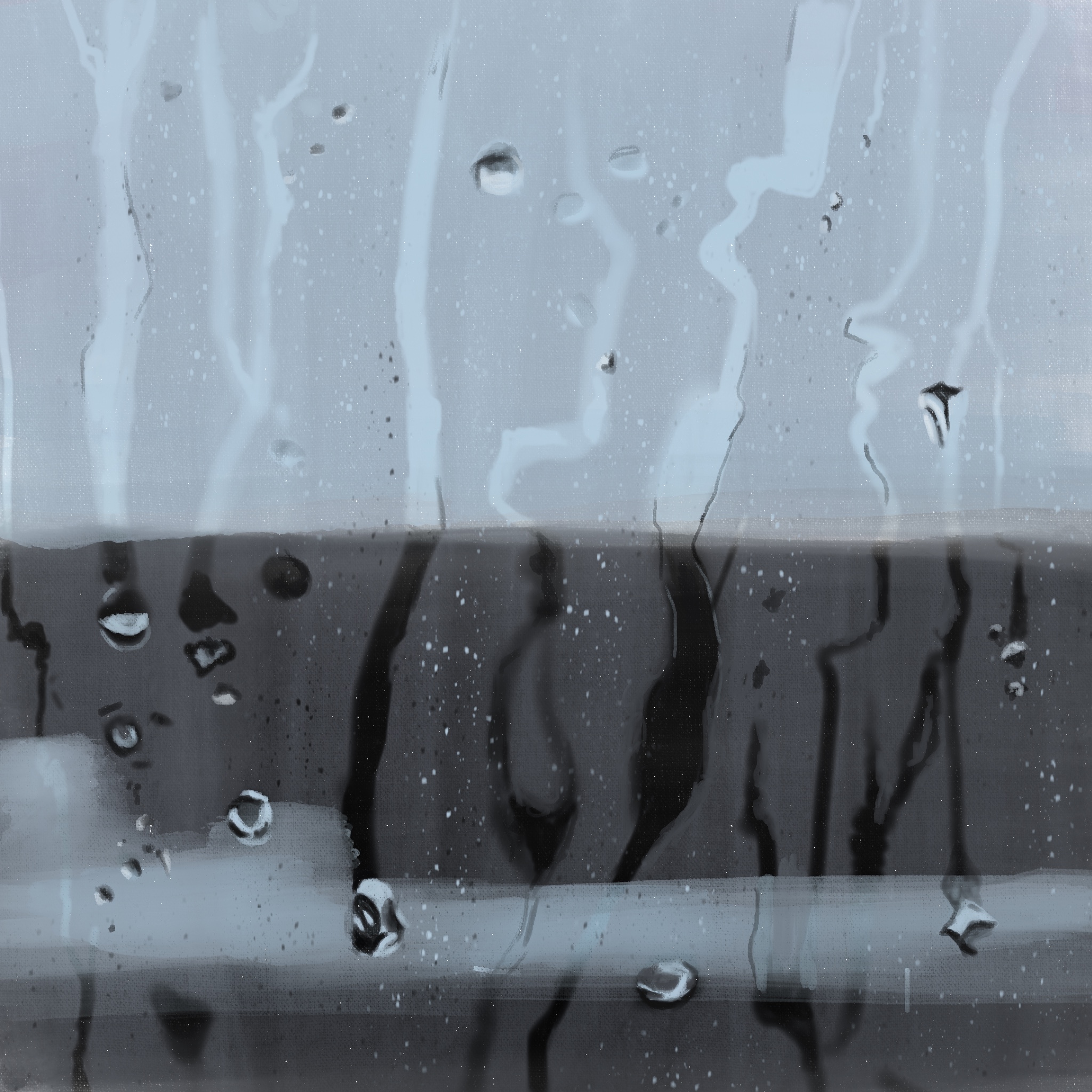
I wake up in the morning and then I put on my bathrobe and then I go to the bathroom and I take off my bathrobe and I take a shower and I am naked in the shower but the hot water feels like my bathrobe. When I really feel naked is when I get out of the shower and the water leaves my skin in droplets or is sopped up by my cotton towel. When I really feel naked is when my wet hair is stuck in the shape it was in while up in my towel and my body is dry and my bathrobe is off. But then I put back on my bathrobe and I brush my teeth, clothing my teeth, and I put on my creams and no, I am not naked, not anymore. And then I go back to my room and I get dressed and nobody is there this whole time but I am acutely aware of my body because I see it in the mirror when I take off my bathrobe and put on my clothes and, like a violation, like an intrusive thought, after it’s gone its afterimage sticks in my brain and I can’t get rid of it until I look at what I’m wearing for a long while such that when I leave my apartment the body I see when I imagine what I look like to others walking around is the one I last saw in the mirror and not that naked body with the water droplets drip drip dripping off of me, cold air coming in on me like a sphygmomanometer which is just a fancy word for a blood pressure machine.
One time I was babysitting my dog at home and I was sick so I wanted to take a bath so I ran the bath and my dog who I suppose was lonely decided to come upstairs with me and he was standing there looking at me and the bath and I didn’t know what to do because I shouldn’t shut the door because he might get anxious and though he was on Prozac I worried about his panic attacks but also I had to get in the bath and I couldn’t get in the bath unnaked but I couldn’t undress in front of my dog. I didn’t know what the feeling was, if I wanted to protect his innocence like he was some human child, until I read Jacques Derrida.
Derrida:
I often ask myself, just to see, who I am — and who I am (following) at the moment when, caught naked, in silence, by the gaze of an animal, for example the eyes of a cat, I have trouble, yes, a bad time overcoming my embarrassment.
Whence this malaise?
I have trouble repressing a reflex dictated by immodesty. Trouble keeping silent within me a protest against the indecency. Against the impropriety that comes of finding oneself naked, one’s sex exposed, stark naked before a cat that looks at you without moving, just to see. The impropriety of a certain animal nude before the other animal, from that point on one might call it a kind of animalséance: the single, incomparable and original experience of the impropriety that would come from appearing in truth naked, in front of the insistent gaze of the animal, a benevolent or pitiless gaze, surprised or cognizant. The gaze of a seer, visionary, or extra-lucid blind person. It is as if I were ashamed, therefore, naked in front of this cat, but also ashamed for being ashamed.
A reflected shame, the mirror of a shame ashamed of itself, a shame that is at the same time specular, unjustifiable, and unable to be admitted to. At the optical center of this reflection would appear this thing — and in my eyes the focus of this incomparable experience — that is called nudity. And about which it is believed that is proper to man, that is to say foreign to animals, naked as they are, or so it is thought, without the slightest inkling of being so.
Me:
What really is the difference between you and me, my cat? To be naked, that is to say to be ashamed, that is to say I care what you think, that is to say I think you can think, that is to say, I will kill you and eat you for food anyway? Well, not you, but something like you. Something with your nervous system, something with your ability to perceive and conceive. I suppose so. I guess I will sit down at the dinner table with my fork and knife and call my cow steak, call my pig pork, call my deer venison, call my chicken chicken —
We don’t seem to care much about chickens, do we? Chickens are not protected under federal animal welfare laws. You can kill a chicken any way you please, you can torture it, you can burn it alive. You can electrocute it but not enough to paralyze it and numb its pain, and then you can make like the Queen of Hearts and not really mean it when you say “Off with your head,” and try to execute it with a guillotine-like machine but fail the first second and third times you try. And when it is finally done and dead, you can de-feather it and make it rotisserie or fried in the form of “fingers” or “tenders” and eat it all, eat all of the suffering it felt in its short life, which was contained to a cage. And in that cage, what was it fed? Chicken. Male chicks who could not hatch eggs, ground up live and sprayed all over the coop like water from a sprinkler. Good feed. That’s what you get, in a red and white bucket. I was going to say, “It doesn’t look like flesh anymore,” but when you bite into it it really does. Those fibers, that sinew, this flesh. Language, powerful enough to convince you that this isn’t a body. When you eat an animal is it like taking communion? Is this eucharist one that doesn’t have to be transubstantiated but already is the body and the blood? Do we better remember the sacrifice? To consume — to digest — to understand, it follows. To eat an animal — to consume it — to digest it — to understand it. It becomes a part of you. All that suffering, a tapeworm in your shadow colon, eating away at your shadow sustenance. And so you eat more.
I worked for a while at a children’s occupational therapy farm where there were chickens, rabbits, and horses. The children would arrive eager to play with the rabbits. The horses were too large to dominate and the chickens had feathers, not fur. But the rabbits did not like to be pet or picked up, something about vertigo. The chickens were the loving ones. I often did my chores with one perched on my shoulder and when ill (in the body or mind) I liked to hold those red and grey things in my arms, so warm, feathers softer than any fur, pillows, really. The chickens liked to be held, often protested when I tried to put them down, yearned to be touched. I know this yearning, we all do.
The difference between the animals we keep in our houses and the animals we keep in the farmyard is the fact that the animals we keep in our houses probably wouldn’t taste very good. They are too lean.
Consider David Foster Wallace’s Lobster:
The basic scenario is that we come in from the store and make our little preparations like getting the kettle filled and boiling, and then we lift the lobsters out of the bag or whatever retail container they came home in …whereupon some uncomfortable things start to happen. However stuporous the lobster is from the trip home, for instance, it tends to come alarmingly to life when placed in boiling water. If you’re tilting it from a container into the steaming kettle, the lobster will sometimes try to cling to the container’s sides or even to hook its claws over the kettle’s rim like a person trying to keep from going over the edge of a roof. And worse is when the lobster’s fully immersed. Even if you cover the kettle and turn away, you can usually hear the cover rattling and clanking as the lobster tries to push it off. Or the creature’s claws scraping the sides of the kettle as it thrashes around. The lobster, in other words, behaves very much as you or I would behave if we were plunged into boiling water (with the obvious exception of screaming).
A student at the farm asked me once why people who say they love animals eat animals and I didn’t know what to tell her. Maybe we eat them to eat our shame for having eaten all their friends. Maybe we eat them because they don’t look like carcasses in shrinkwrap in the grocery store freezers. Maybe we eat them because they taste good, or because everybody does. None of these reasons are good reasons. I love my dog, I don’t eat animals.
Sometimes I am playing with my dog, and suddenly we both freeze and are looking at each other and both know that whoever moves first loses the game. Who is entertaining whom?
Derrida cites Michel de Montaigne:
Taking a man to task for “carving out their shares to his fellows and companions the animals, and distribut[ing] among them such portions of faculties and powers as he sees fit,’’ he asks, and the question refers from here on not to the animal but to the naive assurance of man:
How does he know, by the force of his intelligence, the secret internal stirrings of animals? By what comparison between them and us does he infer the stupidity that he attributes to them?
When I play with my cat, who knows if I am not a pastime to her more than she is to me?…
The 1595 edition adds: “We entertain each other with reciprocal monkey tricks. If I have my time to begin or refuse, so she has hers.”
What to say about our relationship? I feed him. I walk him. We sleep in the same bed. Sometimes he lies on the couch with me and I watch television and he watches nothing. He does nothing all day, unless I give him something to do. Easy to think of this sentient creature we bred for obedience and other desired traits from another sentient creature as dumb, easy to say we are superior.
Derrida cites Jeremy Bentham:
It is in thinking of the source and ends of this compassion that about two centuries ago someone like Bentham, as is well known, proposed changing the very form of the question regarding the animal that dominated discourse within the tradition…
“Can they suffer?” asks Bentham simply yet so profoundly.
I think this is the wrong question. The problem with the initial form of the question regarding the animal was that we could not answer it. The initial question was, can they reason? Do animals have that classic attribute of logos that Aristotle used to distinguish us from bees and ants so long ago? We cannot answer this question. We can ask, but they will not respond in a way that we can understand or even endeavor to. We are discerning when it comes to which animals to eat (their bodies) but undiscerning when it comes to which to respect (their minds, none). We say “sit” and they do, we say “stay” and they do, but we are somehow certain that, because they do not speak to us in our language, they cannot think like we do.
What is an animal rights activist to do with this notion? Is one supposed to be taken seriously demanding respect to be doled out equally to man and (non-human) animal? No. The animal rights activist — Peter Singer — is to change the question to something we can answer, to something an MRI can answer. Can they suffer? Basically, how much do their nervous systems resemble ours? Very much, it turns out. We may not have fur or tails but if you slice us open we are all sort of the same. We have the same organs in similar arrangements. The same fibers, sinew, flesh. Same nerves, same pain.
Can they suffer? Yes. If we suffer, they do. We make them suffer.
But can they think? Roadblock, detour, turn around, tires screeching on the asphalt — can’t get away from that question fast enough. We can, we can think. That we know.
Derrida:
It follows, itself; it follows itself. It could say “I am,” “I follow,” “I follow myself,” “I am (in following) myself.” In being pursued this way, consequentially, three times or in three rhythms, it would describe something like the course of a three-act play or the three movements of a syllogistic concerto, a displacement that becomes a suite, a result in a single word.
If I am to follow this suite, and everything in what I am about to say will lead back to the question of what “to follow” or “to pursue” means, as well as “to be after,” back to the question of what I do when “I am” or “I follow,” when I say “Je suis,” if I am to follow this suite then, I move from “the ends of man,” that is the confines of man, to “the crossing of borders” between man and animal. Crossing borders or the ends of man I come or surrender to the animal — to the animal in itself, to the animal in me and the animal at unease with itself.
When you think about suffering — when suffering — it follows to think about nature. I think about nature often. Something natural is something defined as made without the intervention of humankind, but to some extent humanity was made without the intervention of humankind. Humans evolved by nature, naturally, it follows, what could be more natural than humanity? It follows, what could be more natural than human civilization, if the parts of our brains that guide us toward civil life are natural in themselves? Why draw this line at human intervention? That is to say we are above nature, to turn something natural into something unnatural. Basically, aren’t we all nature, which is to say, isn’t this all nature, which is to say what’s more natural than this mass extinction?
I suppose natural is naked. Naked is natural. What does it mean for me to get up in the morning and put my clothes on? What does it mean for me to be paralyzed with my dog standing on the threshold between the hallway and the bathroom, unable to decide whether or not to take my clothes off and get in the bathtub? When the earth was still naked, all the animals lived in peace. This is a myth. When the earth was naked, the animals were all killing each other. When the earth was naked, there was violence. When the earth was naked, there were ice ages and climate changes and mass extinctions. But there was balance, you say. Before humans, there was balance.
The argument:
Humans have taken the balanced natural world and with their greed have taken over, have dominated in ways that are unnatural. Now the earth is not naked, not natural, and is in danger.
Mine:
The earth is fine. The earth has been molten lava before and will be molten lava again. Not fine? Us. Not fine? The idea that human civilization might die out at some point soon, that humans might be living on a planet that resembles our ideas of the “apocalypse”.
Samuel Scheffler:
Humanity itself as an ongoing, historical project provides the implicit frame of reference for most of our judgments about what matters. Remove that frame of reference, and our sense of importance — however individualistic it may be in its overt content — is destabilized and begins to erode. We need humanity to have a future if many of our own individual purposes are to matter to us now. Indeed, I believe that something stronger is true: we need humanity to have a future for the very idea that things matter to retain a secure place in our conceptual repertoire.
Not fine? Our minds, knowing that our behavior contributes to this future; whether or not we “care” we contend with it, we feel this guilt. But oh, the earth is fine.
We are saying things the wrong way, asking the wrong questions, drawing the arbitrary line between animals that deserve to live and deserve to die at their ability to speak our human language when we cannot even speak it well enough to articulate what is really going on here. To eat or be eaten? To eat, in order to not be eaten? Language to express discernment, though the language is not the discernment itself. Oratory was invented for dubious matters. To orate, which is to say to misconvey.
Me citing Sarah Kay:
Humanity has long consoled itself with the belief that it has sole mastery over language — and therefore, mastery over everything.
Me:
We say language is inadequate, but we are not its masters, and therefore (it follows), we do not have mastery over everything.
The reality is, what I’m trying to say is.
Me citing Yiyun Li:
Words may fall short, but they cast long shadows that can sometimes reach the unspeakable.
Here are the words:
We all suffer from a special kind of anxiety that presents us with the right questions. But we have no answers, so we ask other questions. We ask, can they suffer? The truth is bright like the light of the sun. We can’t look straight at it. We cannot touch it. We cannot even get close. But it is there and its rays shine all over our world, everything the light touches.
Here is the shadow:
How to live? How to be? To eat animals or not to eat them? We can practice thinking through, but that is only one way to be. Logos is either not solely human or not necessary for living — see the cat — and beware the conjecture that conflates these two. And yet innate in human beings is our endeavor to understand, our greed, our desire to comprehend and apprehend. A God who demands to be believed in created us in His likeness — we demand to be believed in. We demand that if the earth is dying, it will be because of us. We demand to insert ourselves where nature is because we can, because the power of insertion lies in the power of dubious oration, authorial intervention, philosophy is fiction, but that is what we do.
The truth:
We follow nature.
Human nature in human terms. Life is entertaining each other with reciprocal monkey tricks and believing we are each the master. Life is comparing the air to a sphygmomanometer and believing that means something.
We wear clothes, and we can take them off but then we are naked and therefore ashamed — we are plagued by conjectures and our ability to make them — to the point where we cannot see things for what they are, including ourselves — but are we not to try? — so we aim at the truth of how to live and how to be but can never discern — this is not nihilism — this is optimism — it all matters in the sense that we must try to live in the sense that if we do not try what else is there to being human — to believe in our smallness like some believe in God — and yet to try to be big — that is our nature (we follow).
Sheep in sheep clothing. Life is wearing clothes. And (more to follow)
Leave a Reply