This semester, I have precept at 7:30 p.m. on Thursdays. Our preceptor, Jane, has instituted a no-tech policy: we must handwrite our notes and print our readings. She stands at the head of a long wooden table in a room that is far too small for the amount of furniture in it. Periodically, she stands to scrawl an insight across the chalkboard. The chalk squeaks; I sometimes shiver, imagining that a hundred years ago people were in this room doing more or less exactly the same thing.
Outside the illusion shatters. In Firestone, they’ve put up these signs that say, “free yourself from your phone!” and offer the option to rent a Yondr Bag. Without these, we apparently cannot resist treating our phones like fifth limbs. Halfway through a three-hour seminar, I itch to check my texts and emails. My Google Calendar, preprogrammed days ago, tells me exactly where to go and when. I semi-regularly enter a fugue state lying on my bed scrolling through Instagram Reels. At what point do I become a cyborg?
Over dinner, my friends and I try to figure it out: we talk about the extent to which everything is changing, and whether we ought to be scared or excited. One says that he is excited about Meta’s AI glasses, and the promise of increasingly immersive simulations. He thinks it would be good to go to Switzerland without having to buy a plane ticket. “The point of life,” he says, “is to experience-max.”
“Right.” Mustard dribbles from my burger, the mosquito bite on my ankle burns; I imagine a machine that could perfectly replicate these sensory details. “But, you know, does it matter that it’s fake?”
He stabs his fork into a piece of pasta. “Sure, yeah.” He’s nodding, considering. “I guess it’s probably not quite as good as real Switzerland. But if you could have ten almost-real experiences for the price of going to, like, one actual place, wouldn’t that be better?”
What is an almost-real experience? We can wonder about what aspects of Switzerland can and cannot be artificially simulated, but that gets away from the real question; what I actually want to know is, is there any value to authenticity in itself? If we can recreate Switzerland perfectly inside a pair of AI glasses, is there any reason to still go? As much as I feel that the answer is yes, if pressed, I can never quite articulate why. Our language, our conversations, do not seem to make space for the abstract inherent value of Switzerland if there is any, no matter how much I wave my hands trying to gesture at it.
But the utilitarian way of looking at the world — where Switzerland is equal only to the net benefit of being in Switzerland — is relatively new to its position of absolute intellectual dominance. This is a change in our collective thinking, perhaps the inevitable result of increasing secularization, coupled with or caused by what my history professor calls a “rationality fetish.” Now that it is no longer acceptable for the intellectual to point to a higher power, truths about the world must be discovered through reason. It is no longer en vogue to suggest that something might matter just because it feels important. If we cannot put proper words to it, it does not exist. Under these constraints it’s very hard not to accept the utilitarian conclusion: things are only good insofar as their outcomes yield some sort of net happiness, and bad if they lead to net suffering.
Under this framework there is nothing to be said for “inherent value.” Things matter only because of their tangible effects. So honesty, for instance, is not important in itself — you should lie about things that people don’t want to hear, unless you think the truth will be revealed somehow and hurt more later, or that it can productively change the situation to make someone happier. The notion of “rights,” that is, some set of things that people deserve or do not deserve to have, just for being born, is incoherent — there are only laws made to maximize happiness, by balancing safety and autonomy. Nothing is beautiful, only good to look at; if a tree falls in the forest unheard, it doesn’t make a sound. And whether something is “authentic” is an absurd consideration, a distraction from or at best a different way of getting at the utility question.
I find this to make perfect logical sense, but — and utilitarianism tells you to discount this, but I am going to try to sit with it for a second — it often feels wrong. For instance, at dinner, although all my friends can get behind the Meta glasses, they are unsure about a hypothetical Neuralink brain chip that makes you smarter. They want to say that the human mind is somehow sacred, and that there is some virtue in organic intellect. But if Switzerland is just the experience of Switzerland, if intelligence is just the experience of intelligence, then why does it matter where either of these things came from? The glasses or the Earth; a piece of metal or your mind; isn’t it all the same? Isn’t it?
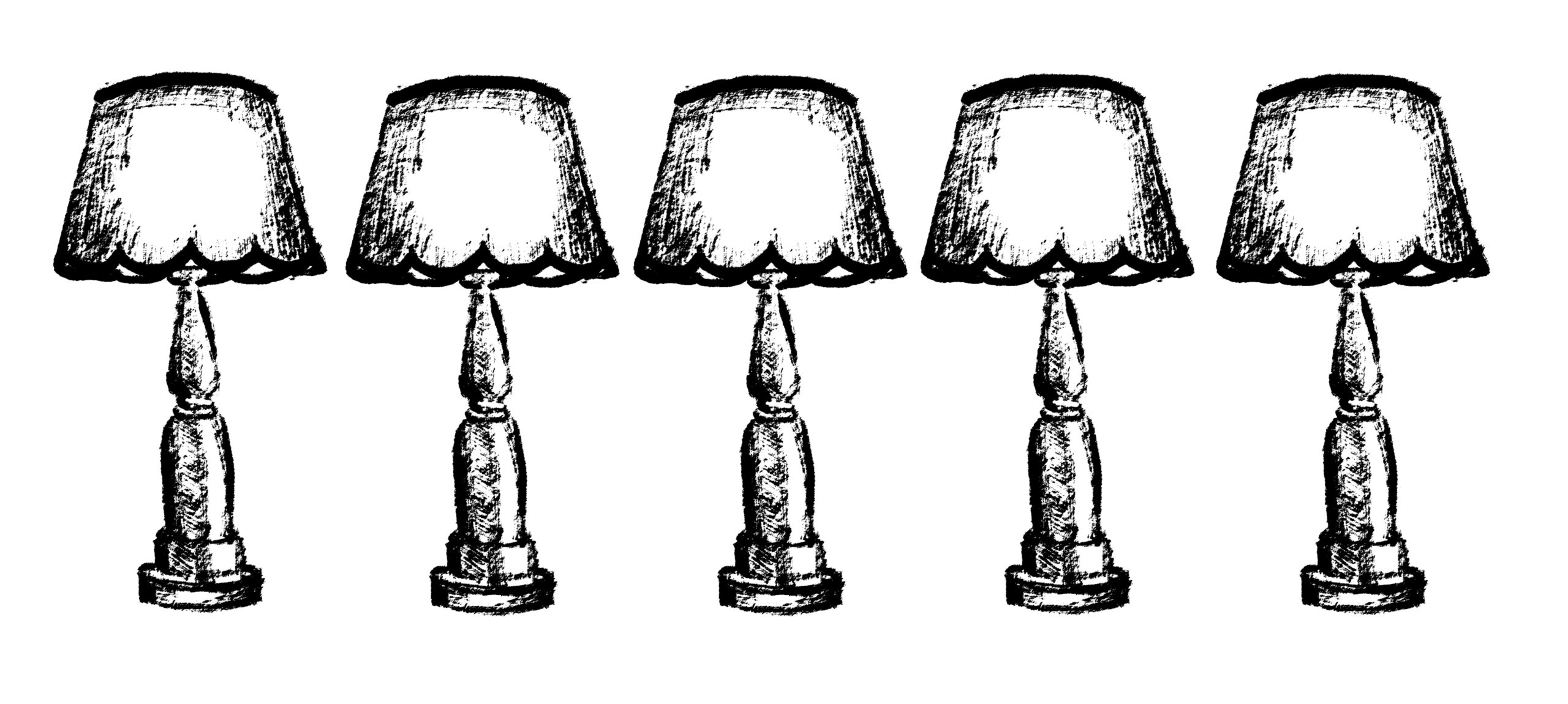
Maybe not. Last week Jane ended class by writing the word “alienation” in big, swooping letters across the board. “Can someone tell me what this means, alienation?” she said. Someone raised their hand and explained that during the Industrial Revolution people who had been artisans, who made handcrafted products from start to finish, became factory workers playing one small part in an assembly line. They had no control over the end product, which was always the same — you could go to a store and look at fifty identical lamps and be completely unable to tell which of the fifty you had or had not been involved in creating. Alienation, then, was the sense of being distinctly separate from your end product, such that the meaning, the dignity, of the work was stripped away.
I did, in that moment, feel a kind of boundless gratitude that, for now, my primary tasks consist of reading books and writing essays. Once a paper is done it is a record of some kind of self-making: I know where each word has come from; I remember reaching for it. Of course they are not all like that — there is the paper you write in some sort of glorious wood-paneled room with sun filtering through the windows and a cup of coffee, and there is the paper you type up frantically on a plastic table, in the half hour between class and your next recruiting call. (Substitute paper for whatever it is that you love to do, and then whatever you do only to achieve some desired end result. Interestingly they’re sometimes the same thing in different forms.) I don’t mean to overinflate the importance of aesthetics, but I don’t want to underinflate it, either, because maybe you have to have a certain amount of love for the process to really own the product. Maybe beautiful things are a way to connect to the experience of making, to own your creation, to no longer be alienated.
Does that matter? The utilitarian consensus is that there is no inherent value in ownership; that maybe it is good to write in a nice room, but only because it might make us feel happy. The tragedy of the Industrial Revolution was simply that people were shifted to worse jobs or no jobs and so they suffered, so they were sad — but this can be measured up against the amount of things that were produced and the amount of people that continue to benefit from them. Probably if we do the math on this, the outcome is a net good. Recently, the utilitarian consensus has also been toying with the idea that if you are here at Princeton dedicating your time to improving your academic writing, one day ChatGPT will be consistently able to write something better, and you are probably better served by building your network. Perhaps the next revolution in industry has arrived, rocking the foundations of knowledge work, and your knowledge only mattered when it was the sole way to access or articulate profitable ideas. Now there are robots for that, so how will you pivot; how will you continue to add value to the world; the market, I mean?
In that little room where we have 7:30 precept, though, Jane seems to see things differently. Her eyes are sparkling while she rolls chalk between her palms; she is parsing through ideas, poking at thoughts as though it’s the most beautiful exercise, worth something apart from the grade and the degree. “Exactly,” she says, “alienation is about dignity, about feeling that what you do and what you are matters.” She pauses. “So you could say — and this is reductive; I’m oversimplifying, but we’ve been talking about modernity, and maybe the question of modernity is just this. Alienation. How do we ground ourselves; how do we come back to Earth?”
Leave a Reply