
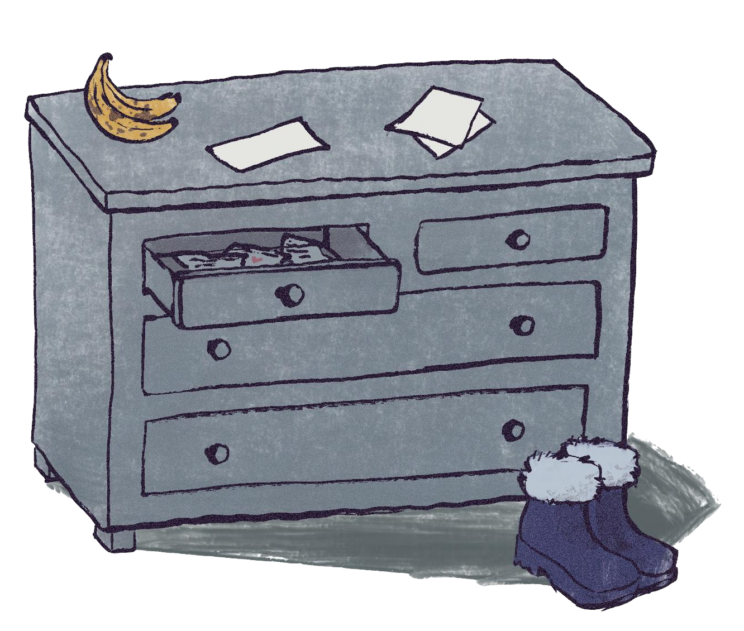
The extremely specific black-brown spots on bananas, as though painted upon; symbols in smoke; the convenience of exploitation; the mistake of birth. Perhaps the last one is common in all lands. The uncomfortable ease of your childhood bedroom cannot be replicated. An echochamber of extremity—too cold, or too hot, with peeling walls. And the set of oddly confrontational mynas perching in the balcony outside. The drawers, which Ma has thankfully not checked, contain secret love letters. The lover knows your address. You fear the day he shows up randomly at your door. The home does not explicitly remind you of him, but you are convinced the home laughs at the thought of him. The society’s aunties bring their babies to the park. The rain shelter is a safe haven of judgement. A panopticon overlooking this gated community. The sun is good for the babies. Young couples are not. Have some shame! the aunties yell out. The red benches squirm under the weight of the unknown, as though toddlers aching for their mother. The park’s gates enclose further. The security guards remember. The unpainted gray wall on the balcony. The guilt of the flight ticket home hidden in the fur of your new winter boots. Your love for home should not be proportional to its ease. Convenience is not love. Your city is not a city of ease. Perhaps it is of a partly arranged and partly loved home. Crying at the airport—an airport surrounded by hills. The beauty of kindness and the ignorance of foreign lands. The body is accustomed to the night. Unable to speak in its childlike tone. Baba, ever so complaining, and your maashi kneeling down to wipe the floors and pick up the pigeon droppings. The squirrels continue to terrorise the home. The parrots swing in entertainment. The lizards, thankfully, sleepin corners of the closet that you do not bother to check. The commode moves under the weight of your body. You have gained three kilograms. The first night home, you throw up. You wake up at 5 a.m. and sleep at 8 p.m. You hug your mother as an apology. The Sundays are the Sundays of childhood—the distinctive call of the kabadiwala, the strange movement of time, the commotion of familiarity. It is strange when home is tentative. Your life in the palm of your hands—where would you go? The condom in your bag—a component of a social experiment, of course—waits to be discovered. The different races of your friends are analyzed. You cannot dare to fall for another. Or fall at all. Difference is shame. At home, shame persists in all kinds of un-visitation. All kinds of leftovers. The expired Hershey’s syrup in the fridge. Alcohol bottles containing water. Lazy deception. Dusty corners. Stuffy drawers. You will find it. Just look.
I know the world makes no mistakes.
Srina Bose enjoys grappling with recognition in its most complicated form.